Fridge Styles, Measured From the Aisle
We build the cabinets that go around fridges and do not sell a single one, so we have no favourite. Here is what each of the six door styles asks of your floor, your walls and your opening — and the five measurements that decide delivery day long before the ice maker does.
The real test of a fridge does not happen in a showroom. It happens on delivery day: two people and a dolly at the kitchen doorway, the new fridge strapped upright in its plastic, and everyone quietly doing arithmetic. Will it clear the door frame? Is the opening between the cabinets the size the spec sheet said? When the door swings, does it meet the wall before the crisper can come out? Is there a water line behind it, and can anyone reach the valve? A showroom has none of those things — no door frame, no wall beside the hinge, no island three and a half feet away. That is why people choose a fridge on the things that rarely go wrong, and get caught by the ones that do.
A French-door fridge suits most kitchens: its two half-width doors need roughly half the aisle a single door does, the fresh-food section is full width for platters, and the freezer is a drawer below. A side-by-side has even narrower doors and an eye-level freezer, but its tall compartments are too narrow for wide dishes. A single door, top freezer or bottom freezer swings its full width into the room — fine in an open kitchen, tight in a galley. Choose counter-depth if the aisle is narrow, and measure the way in before you buy.
The five things that go wrong on delivery day
Ask anyone who delivers or installs appliances what goes wrong, and you get the same short list. None of it is about features. Every item is a measurement somebody skipped, and every one can be checked this week.
- It does not fit through the house. The front door frame is the first narrow point. Off come the fridge doors, then the handles, sometimes the front door itself. Then the hallway turn, which needs more room than a straight doorway, then the stairs and the kitchen doorway — and in a condo, the elevator and the corridor before any of that. What it tells youThe narrowest point on the way in, not the opening, decides which fridges you can own. Measure it before you shop.
- The opening is the wrong height or width. The fridge is a fraction of an inch too tall for the space under the cabinet above, or too wide for the gap. Usually the opening was built tight around the old fridge instead of to the standard size. Sometimes a new floor has gone down since — tile on a membrane, hardwood over the old vinyl — and quietly raised the floor while the cabinet above stayed put. What it tells youThe opening belongs to the cabinets, not to this fridge. Build it to the standard and the next fridge fits too.
- The door hits a wall or the island, and the crisper will not come out. Someone opens the door and it stops. Against a side wall or a tall pantry the door reaches 90° and the crisper is trapped behind it, because most fridges need the door well past 90°, often closer to 115°, before the drawers slide out. Opposite an island the door clears, but leaves a slot you have to turn sideways to stand in. What it tells youThe door is the biggest thing a fridge puts into the room. Its hinge side and its reach are floor-plan questions.
- It stands proud of the cabinets by more than anyone pictured. Everybody imagined it in line with the counter. A standard-depth box stands 5–6″ past the cabinet faces before you count the doors and handles, and even a counter-depth one has its doors and handles standing out past the counter edge. What it tells youDepth is the number that decides whether the kitchen looks planned. Read it with the doors and handles included.
- There is no water line, or no shut-off anyone can reach. The fridge has an ice maker and a dispenser; the wall behind it has nothing. Or there is a line, with its valve behind the fridge, where nobody will reach it on the night the fitting starts to weep. The ice maker stays dry until a plumber can come. What it tells youWater is a rough-in, decided while the walls and the cabinets are open, not on the day the fridge arrives.
Now notice what nobody argued about on delivery day: the cubic feet, the shelf layout, the finish, the screen on the door. Those were most of the showroom visit, and they almost never decide whether a fridge works in a kitchen. A door style matters because of where its doors swing and what its box needs from the cabinets; nearly everything else is preference.
What they search at midnight “french door vs side by side refrigerator” — both have short doors; the real difference is whether a wide dish fits.
Six styles, side by side
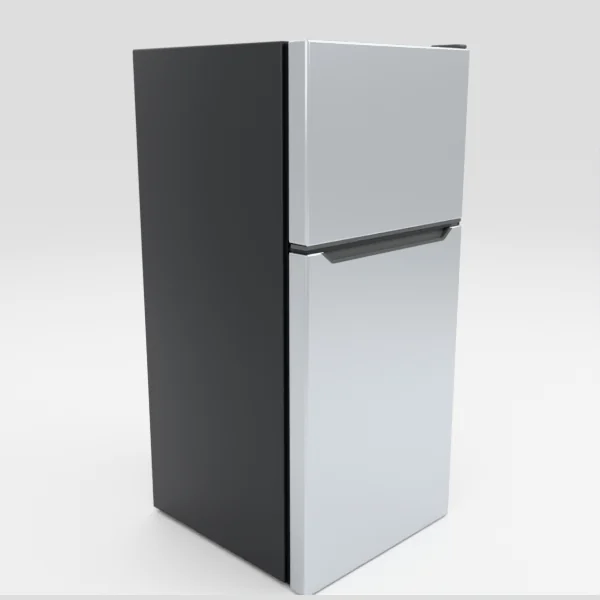
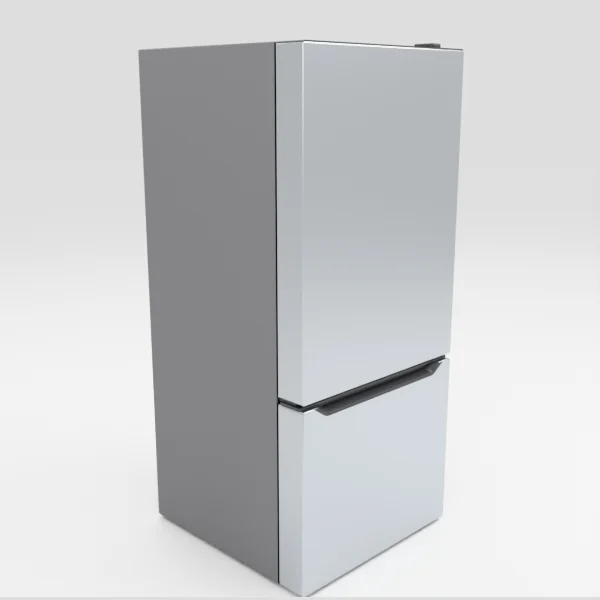
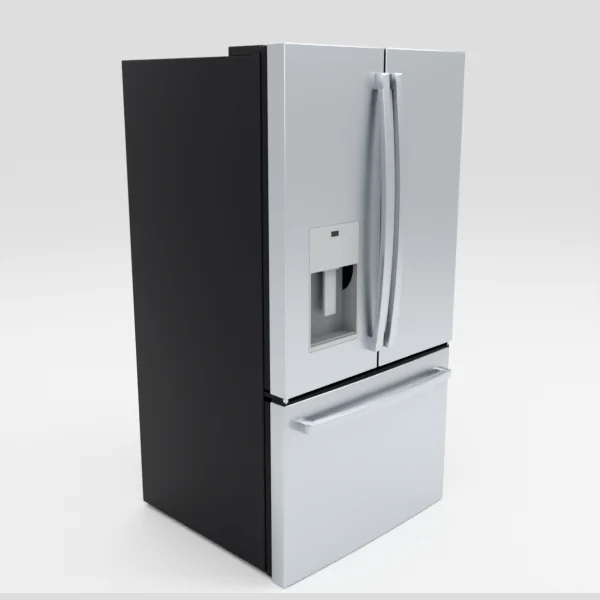
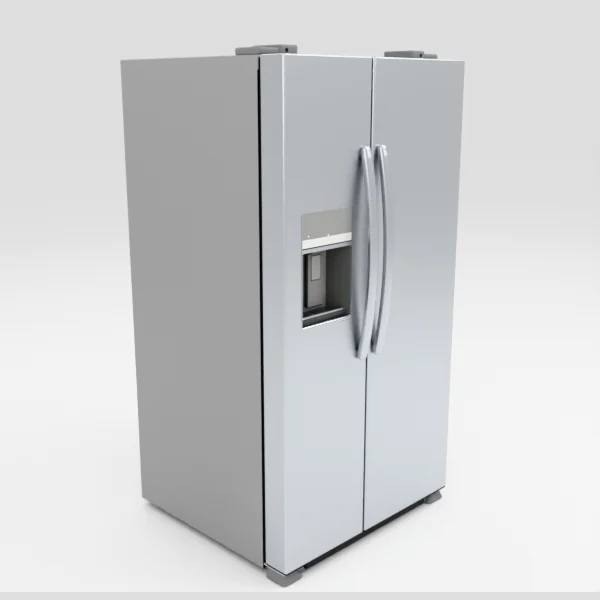
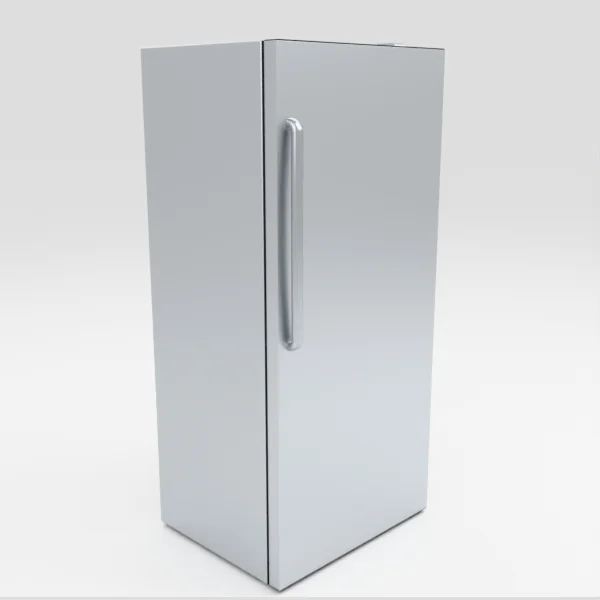
| Style | Door reach at 90° | Freezer | Wide platter? | Common widths | Hinge side |
|---|---|---|---|---|---|
| Top freezer | Its full width | Eye level, behind its own door | Yes | 24, 28, 30, 33″ | Usually reversible |
| Bottom freezer | Its full width, plus a drawer straight out | Pull-out drawer at the floor | Yes | 24, 28, 30, 33″ | Usually reversible |
| French door | Half its width, plus a drawer straight out | Pull-out drawer at the floor | Yes — its strength | 30, 33, 36″ | Both sides; not reversible |
| Side-by-side | Under half (each leaf) | Full height, eye level | Often not | 33, 36″ | Both sides; not reversible |
| Single door | Its full width | None — a separate one | Yes | 28, 30, 33″ | Usually reversible |
| Column | Its own width | A separate column | On the wider ones | 18, 24, 30, 36″ | Often set when ordered |
Read the second column first. The door reach is what the fridge takes from the room every time it is opened, and the one thing on the table you cannot change after the cabinets are in.
No prices or brands on purpose — we don’t sell appliances, so this is the neutral version. Widths are the common ones, not every one made; the exact model’s spec sheet is the number that counts, and the care guide covers looking after it once it is in.
Top freezer — the narrow, simple one
Top freezer
Best when the gap is narrow or the budget is the constraint
The one most of us grew up with: a short freezer door over a taller fresh-food door, both full width. It is the simplest of the six, usually the least expensive for its capacity, and comes in the narrowest widths — 24 and 28″ models are easy to find, which suits an older condo or a cottage. Most have hinges you can swap.
How it lets you down: the food you reach for all day sits low, crispers at the bottom, while the freezer gets the convenient height. And in plan, the fresh-food door is the full width of the fridge — a 30″ door reaches about 30″ into the aisle at 90°, and it has to go further than that before the crispers will slide out. In a galley that is most of the floor.
- Least expensive and simplest style
- Fits 24″ and 28″ gaps other styles skip
- Hinges usually reversible
- Fresh food low; crispers at the floor
- Full-width door, the biggest swing
- Freezer gets the best height, fresh food does not
People talk about the top freezer as the fridge you settle for. The trade sees it differently: it is the fridge with the fewest things to go wrong. Two doors, two seals, usually no dispenser, often no ice maker, and a layout that is generally the most economical to run for its size. In an opening you cannot widen — a 24″ gap in an older condo, a cottage kitchen built round a small fridge — it is not the compromise, it is the answer.
In a showroom, open the fresh-food door to 90° and try the crisper; if it catches, imagine a wall there. Look at the top of the case on the side opposite the hinge: small capped screw holes there usually mean the doors can be moved to the other side.
Its quiet weakness is height, not space: everything you use most lives below your waist. For a household that cooks every day that is a lot of bending; for a cottage or a second fridge, it hardly matters.
Bottom freezer — fresh food up, freezer underfoot
Bottom freezer
Best for fresh food at eye level in a 24–33″ gap
The top freezer turned upside down: one full-width fresh-food door at the top, the freezer underneath — on most current models a pull-out drawer, on some narrow ones a second door. Fresh food lands at eye level on full-width shelves, and it still comes in 24 to 33″ widths — the usual upgrade where a 36″ fridge will not fit.
The fresh-food door is still the whole width, so it swings exactly like a top freezer’s. The freezer drawer adds a second move: it comes straight out into the aisle, most of its own depth, and you stand beside it rather than in front of it — the same dance as an open dishwasher. Inside, a drawer is a deep bin, and the bottom layer gets forgotten.
- Fresh food at eye level
- Full-width shelves for wide dishes
- Narrow widths still available
- Full-width door swing
- Freezer drawer pulls into the aisle
- Freezer at floor level; things get buried
A bottom freezer puts two movements into the room: a door that swings to one side and a drawer that comes straight at you. Stand where the drawer will open and ask whether anyone walks through that spot — to the back door, the basement stairs, the sink.
In the showroom, pull the freezer drawer all the way out and look at what it does. Good ones run on full-extension slides that carry the load without sagging, with an upper basket that slides on its own so the top layer is not in the way of the bottom. On others the drawer stops short and the back third is where frozen peas go to be forgotten. Those slides carry every kilogram of frozen food each time, and get closed with a knee more often than the brochure suggests, so their feel is worth a minute.
It is the style that makes most sense when you would love a French door and the opening says no: fresh food at eye level in the gap an old top freezer left behind.
French door — the safe choice, and not one fridge
French door
Best for most kitchens with a 36″ opening, and the safest choice in front of an island
Two half-width doors over a freezer drawer; four-door versions add a middle drawer between them. The fresh-food section is one full-width space, so a platter or a sheet cake goes in flat, and you open one leaf for the milk. 36″ is the common width, with 30 and 33″ models and plenty of counter-depth versions.
In plan this is the style that solves things. On a 36″ fridge each leaf is about 18″, so it reaches roughly half as far into the aisle as one 30″ door — the reason our small-kitchen guide reaches for it in a galley. The catch is at the sides: hinges on both sides that cannot be swapped, and a full-width drawer inside usually wants both leaves past 90°, so it needs clearance at both ends. The freezer drawer pulls into the aisle like a bottom freezer’s.
- Short doors: about half the swing
- Full-width fresh-food shelves
- Counter-depth versions widely available
- Needs door clearance on both sides
- Hinges cannot be reversed
- Usually costs more than a top or bottom freezer
Here is what the label leaves out. “French door” describes the top half of the fridge and nothing else. Under that one name sit fridges that differ more from each other than a top freezer differs from a bottom one:
- Three doors or four. The four-door version adds a drawer between the fresh-food doors and the freezer, at about waist height — handy for drinks and snacks, and on some models switchable between fridge and freezer temperatures. It is paid for in height: the fresh-food section gets shorter and the freezer drawer shallower
- Counter-depth or standard depth. Same style, different box. The counter-depth one gives up volume to sit nearly in line with the cabinets; the standard one holds more and stands 5–6″ proud. Decide this before you fall for a model, because it changes the whole side of the room
- Where the ice maker lives. On many French doors it sits in the upper corner of the fresh-food section or inside the left door, and a dispenser in that door takes a slice of its shelves. Others keep ice in the freezer drawer. Open the left door in the showroom and look at what the ice took
- One cooling system or two. Some models have a second evaporator, so the dry air from the freezer is not circulated through the fresh-food side. It is a real difference in how produce keeps and whether smells travel, but it belongs to the model, not the style — the spec sheet says whether it is there
Look closely where the two doors meet. There is no post between them; one door carries a hinged strip along its edge that flips out to close the gap when both are shut, and the seals on both doors press against it. That little strip is the whole seal for the middle of the fridge. If the box is not level, or one door hangs lower than the other, it does not sit square: a door that does not quite close, or sweat on the strip. Most models have a way to raise one door to match the other, and installers use it before they leave.
The other thing the trade sees is the French door that replaced a top freezer at the end of a run. The old fridge had one door, hinged away from the wall; the new one has hinges on both sides, and the one against the wall opens to 90° and stops. With both doors unable to swing wide, the full-width crisper cannot come out at all. The cure is a filler on the wall side, which is easy to plan and miserable to add afterwards.
Side-by-side — freezer at eye level, narrow on both sides
Side-by-side
Best for households that live out of the freezer, in a narrow aisle
Freezer and fridge split top to bottom, each behind its own full-height door, with the freezer usually the narrower side. That puts frozen food at eye level, with lots of door shelves. Both leaves are narrow, so in plan it is the gentlest of the six: on a 36″ model even the larger door reaches only about 21″. Common widths are 33 and 36″.
How it fails: width. Each compartment is a tall, narrow slot, so a large pizza box, a half-sheet pan or a wide platter often will not lie flat — on the freezer side especially. Deep, narrow shelves hide things at the back. Like the French door, it has fixed hinges on both sides, so a wall at either end costs you swing.
- Shortest door swing of the six
- Freezer at eye level, full height
- Plenty of door storage
- Narrow compartments; wide dishes don’t fit
- Hinges on both sides, not reversible
- Deep shelves hide things at the back
People talk themselves out of the side-by-side for one good reason and one bad one. The good reason is the width test: if the household buys large frozen pizzas, makes sheet-pan dinners or brings home party trays, it fails it. Take your widest dish to the showroom and try it on a freezer shelf. If it goes in flat, half the argument against this style is gone.
The bad reason is assuming the French door is better at everything. For a household that opens the freezer more than the fridge — batch cooks, people who buy in bulk, children who live on frozen snacks — an eye-level freezer with full-height door shelves is genuinely easier, and the narrow doors are the kindest of any style to a tight aisle.
One thing the tag will not tell you: where there is an ice and water dispenser, it lives in the freezer door, and its ice bin takes a good share of an already narrow compartment.
Single door — all fridge, with the freezer somewhere else
Single door, all-refrigerator
Best when the freezer lives somewhere else — often the basement
One door, all fresh food, no freezer at all. It makes sense in two situations: a household that already has a chest freezer in the basement, and a kitchen that pairs it with a matching all-freezer. Widths of roughly 28 to 33″ are common. Most have a reversible hinge, and a pair is usually hinged outward, so the two doors open away from each other like one big French door.
Its door is the whole width, so it swings like a top freezer’s, and a matched pair takes more wall than one 36″ fridge — two openings, two sets of clearances, likely two outlets.
- Most fresh-food space for the width
- Hinge usually reversible
- Pairs well with a freezer elsewhere
- No freezer — you need one somewhere
- Full-width door swing
- A matched pair eats wall
This is the fridge for people who already know how they shop. A family that fills a chest freezer every autumn does not need a small second freezer taking a third of the kitchen fridge. Give that space to fresh food and the single door holds more of what you open every day than anything else of its width.
As a pair, hinged outward, it is the way to get a very large fridge without a very large door. The cost is wall: two units, the trim between them and the clearance at each outside hinge add up well past the 36″ of a single fridge. Ask whether the maker sells a kit to join the two.
Column — and the three things “built-in” can mean
Column refrigerators and freezers
Best when you want the fridge to disappear into the cabinets
Columns are sold one function at a time — a fridge column, a freezer column, sometimes a wine column — in widths such as 18, 24, 30 and 36″, and you combine them. Most are panel-ready: the door takes a panel that matches your cabinet doors, so the fridge reads as one more tall cabinet. They sit flush and breathe through a front grille, so they need very little air around them. Many stand taller than a freestanding fridge, lining up with tall pantries rather than tucking under a wall cabinet.
What they ask for is precision. The opening is built to the maker’s drawing — width, height and depth — with a level floor, an anchor against tipping, and a door panel cut to that drawing and kept within the weight the hinges are rated for. That makes a column a cabinet decision first: choose the model before ordering the cabinets, because a later swap means rebuilding the opening. Count the wall too: a 30″ fridge column beside an 18″ freezer column is 48″, against 36″ for a French door.
- Truly flush, truly built in
- Mix widths and functions
- Door panels match the cabinets
- Most expensive route by far
- Model fixed before cabinets are ordered
- A pair takes more wall than one fridge
“Built-in” is the most stretched word in the fridge aisle. It is used for three different things, and each asks something different of the cabinets:
- A freestanding fridge made to look built in. An ordinary fridge, usually counter-depth, in the standard opening, with a deeper 24″ cabinet over it and a tall finished panel each side. It still needs its air gaps, its doors still stand proud, and any standard fridge can replace it. This is the one most kitchens should want
- A built-in fridge. Fridge and freezer in one unit at cabinet depth, venting at the front so it can sit with about an eighth of an inch around it, often taller than 72″, with stainless or panel-ready doors. It needs an opening built to its own drawing, an anchor against tipping, and a replacement of the same size one day
- Columns. Single-function units behind panel doors, combined side by side. Everything the built-in fridge asks, times two, plus a hinge side often fixed when you order
The opening for a column or a built-in fridge is drawn by the appliance maker, not the cabinet maker, and the drawing changes from model to model. Cabinet shops ask for the exact model number before they will build it — the full number, not the series. Order the cabinets first and the fridge second, and the fridge you finally choose may be a little taller than the drawing you built to.
Panels are the other surprise. A panel-ready door is cut to the appliance maker’s template, and its weight is part of the design: a heavy solid or thick painted panel can be more than the hinge was built to carry. Our own cabinet range does not include panels for appliance doors, so if you want a panel-ready fridge in a Flip kitchen, choose the model early and source its panel separately — the same advice the appliances chapter gives for a panel-ready dishwasher.
How it really goes wrong — the door, the aisle and the years
Every fridge problem that is not a breakdown is a geometry problem, and almost all of the geometry is in front of the fridge, not inside it. Here is the same 42″ aisle with three kinds of door.
Twelve inches is not a place to stand; it is a place to squeeze past an open door sideways. Plan about 42″ of clear floor where someone works and 48″ where two people cook — the island guide has the aisle numbers — and then subtract the door.
Counter-depth is not flush. The phrase describes the box: about 24–25″ deep, so the case sits nearly in line with cabinets that are themselves about 24″ deep. The doors are in front of the box, and the handles are in front of the doors. Together they always stand proud of the cabinet faces, by a few inches. So measure the aisle from the handle, not the counter edge. A standard-depth fridge, about 30″ or more, adds its 5–6″ on top of that.
The hinge side is the other half of the geometry, and it follows the style:
- Top freezer, bottom freezer, single door — one fresh-food door, usually reversible. The right hinge side is generally the one at the wall, so the open door does not stand between you and the counter. That is exactly the side that then needs room to swing past 90°
- French door and side-by-side — hinges on both sides, fixed. Both ends of the opening need swing room, which means a filler at a wall on either side, not just one
- Column — often set when the unit is ordered. Choose it with the floor plan in front of you, not in the showroom
And then there is time. A fridge goes wrong on a timeline of its own:
- The first week. Doors that do not line up, because nobody levelled the box after it was rolled in. A crisper that will not come out because the door meets a wall
- The first month. Warm sides, which on many models is normal — the fridge gets rid of heat through its case, which is why it needs its air gaps. A cabinet over it that is warm to the touch is the sign it has been squeezed in too tight
- The first year. Dust packing the coils or the front grille, so the fridge runs longer and louder. A water fitting behind it that has started to weep, noticed only as a dark stain on the floor or a swollen bottom edge on the cabinet beside it
- Ten years on. The fridge is replaced; the cabinets are not. A fridge lasts a fraction of the cabinets’ life, and this is the day an opening built tight to the old model means a cabinet comes out, or the new fridge is smaller than you wanted
What the numbers on the specification sheet actually mean
Every fridge has a specification sheet, usually with an installation page at the back. It is the most useful document in the purchase, and almost nobody reads it before delivery day. Each headline number on it is really several:
- Width — the case, not the opening. The sheet also gives the air it wants at each side; the width plus both of those has to fit between the cabinet sides. A “36-inch fridge” is a class, not a measurement
- Height — often two figures: to the top of the case and to the top of the hinge covers, which stand above the case on many models. The higher one, plus the air the sheet asks for on top, is what has to fit under the cabinet above. Levelling legs add a little more
- Depth — up to four figures: the case alone, with the doors, with the doors and handles, and with a door open at 90°. “Counter-depth” refers to the first. The aisle cares about the third and fourth. The delivery path cares about the depth with the doors and handles off
- Required clearances — the maker’s own figures for sides, top and back. As a rule of thumb, freestanding fridges want roughly ½–⅝″ each side, about 1″ on top and 2″ behind for the cord and the coils; built-in and integrated models are designed to fit with about an eighth of an inch, because they vent at the front
- Door swing — the room the door needs at 90°, and how far past 90° it must open before the shelves and drawers come out, often close to 115°. Some sheets give the clearance needed on the hinge side for that; that is the number for the filler
- Water and power — many installation pages show where on the wall behind the fridge the outlet and the water supply should sit, so neither holds the fridge away from the wall
Read the sheet for the exact model number you will buy; sheets differ between models in the same series.
Build the opening for the next fridge, too
Whichever style you pick, the cabinets around it settle most of what goes right or wrong. The standard opening for a full-size fridge is 36″ wide and 70–72″ high (about 91 cm by 178–183 cm) — the space between the cabinet sides and under the cabinet above, not the fridge’s own size. The full fridge numbers are in the appliances chapter.
The cabinet above lines up with the wall cabinets beside it at the top and stops at the top of that opening at the bottom — beside 30″ uppers topping out at 84″, a 12″ cabinet. Ordered in a deeper 24″ box, its face lines up with the fridge instead of hovering a foot behind it.
Whatever the style, these habits are worth more than any upgrade on the fridge itself:
Get the spec sheet before the cabinets are ordered. If the fridge is not chosen yet, plan the standard opening and choose a fridge that fits it.
Build the standard opening and fill the difference. Even if today’s fridge is 30″, build 36″ by 70–72″ and take up the gap with fillers that can come out later. The next fridge is usually bought in a hurry, the week this one gives out, and a standard opening means the whole showroom fits.
Put a filler on the hinge side at a wall. 3″ is the usual, never less than 1″, and a ¾″ end panel does not count toward it. French doors and side-by-sides need it at both ends if both ends meet something tall.
Rough in water even if this fridge has no ice maker. A cold-water line to the back of the fridge, with a shut-off you can reach without moving it — in the cabinet next door, or below in the basement. Small job with the wall open, large one later. Most installers avoid self-piercing saddle valves and thin plastic tubing for it.
Put the outlet where the plug cannot hold the fridge off the wall. A recessed outlet box, or an outlet placed where the sheet shows, so the plug and its cord sit beside the fridge’s back rather than behind it.
Measure the path in before delivery day. Every door, turn, stair and the elevator, against the fridge’s depth with its doors and handles off. Then fit the anti-tip bracket if the fridge came with one, and level it so the doors line up and swing closed on their own.
Five things the door style does not decide
A lot of fridge regret gets blamed on the style when the style had nothing to do with it.
- How well food keeps. That is the temperature setting, the door seals, whether the fridge can breathe and, on some models, a second cooling system. Any of the six keeps lettuce crisp if those are right.
- Whether it looks built in. That is depth, the cabinet over it and a panel at each side. A counter-depth bottom freezer under a deep cabinet looks more planned than a standard-depth French door standing 5–6″ out of the run.
- How much you can actually use. Two fridges with the same cubic feet can hold very different things: a tall, narrow side-by-side compartment and a full-width French-door shelf are not the same space. Bring your dishes to the showroom, not the number.
- Whether it fits. That is the opening, the hinge side and the path in. Every style can be stuck at a front door.
- Whether it lasts. The door layout is rarely what breaks. Ice makers, dispensers and water valves are the parts that wear, and every style can be bought with or without them. The fewer things in the door, the fewer things to fail.
And one piece of language to watch for: “built-in look.” It means a freestanding, usually counter-depth fridge that looks tidy with trim around it — a perfectly good thing to buy, but not a built-in. It still needs its air gaps and will not sit flush however carefully the cabinets are built.
How to shop for a fridge with a tape measure
A showroom fridge stands in an aisle twelve feet wide with nothing beside it, which makes every door look easy. Take your opening and path measurements, a roll of painter’s tape and the widest dish you own. Tape a line on the floor at the width of your aisle, open the doors and stand where you would stand at home. Pull every drawer. Put the dish on a shelf.
Then ask the questions that tell you more than the name on the door:
- Can I have the spec sheet for this exact model number? — not the series; the sheet with the installation page
- What is the depth with the doors and handles, and without them? — one is for the aisle, the other for the front door
- How far past 90° does the door need to open to take the drawers out? — and how much room that needs on the hinge side
- Is the hinge reversible? — and who swaps it, and when
- Counter-depth to what? — the case, or the doors? The answer is almost always the case
- Where is the ice maker, and what does it take from the shelves? — open that door and look
- Does it need water for anything, and where should the supply sit? — the installation page usually shows a zone on the wall
- Is it built in, built-in look, or panel-ready, and who supplies the panel? — three different products, three different openings
Flip sells kitchen cabinets (plywood or particleboard boxes) and quartz countertops — not appliances — so we meet the fridge when it arrives, and we have no reason to prefer one style over another. The two failures we see most: an opening sized tight to a 30″ top freezer, followed a year later by a 36″ French door with nowhere to go; and a door hard against a wall that opens to 90° and stops, with the crisper drawer trapped behind it.
Both show on a plan. Our free planner has generic, unbranded fridges in each style and common width: drop the one you are considering into the opening, and check its door against the wall and the island — Design check flags too little room beside the fridge for its door, and the aisle figure above is the arithmetic for the space in front. The door stays shut in 3D, so check it on the plan, then swap styles and compare. The other layout mistakes are here.
What we would do, kitchen by kitchen
The rules are simple. Here is how they fall for the kitchens people actually have.
A family house you plan to stay in. A 36″ French door, counter-depth if the aisle in front is tight or an island sits opposite. Build the standard opening, a filler on any hinge side that meets a wall, and a water line with a reachable shut-off whether or not this fridge makes ice. That opening takes the next two fridges without anyone touching a cabinet.
A condo. Measure the elevator, the corridor and the unit door before you look at a single fridge, and ask the building about delivery rules. Then a counter-depth French door if the opening is 33 or 36″, or a bottom freezer if it is 30″ or less. In a condo galley, the door swing is the whole decision; the small-kitchen guide shows why.
A basement suite. A top or bottom freezer in 24 to 30″, with a reversible hinge and no dispenser. It is the simplest machine, the easiest to replace, and has the fewest parts a tenant might not mention when they start to drip.
A cottage. The narrowest top freezer the opening allows, or a single door if there is a chest freezer already. Cottage kitchens were often built round small fridges, the way in is often a narrow door off a deck, and simple is what you want in a place you are not in every week.
A rental you own, or a house you are fixing to sell. A bottom freezer or a French door in the standard opening, with the deep cabinet over it and a panel each side. People judge a kitchen partly by whether the fridge looks planned, and a standard opening means any 36″ fridge drops in later.
A small or galley kitchen. French door or side-by-side, counter-depth if at all possible, because short doors are the only way to keep somewhere to stand. If the gap is only 24–28″, a top or bottom freezer, with its hinge on the wall side and its swing checked against the counter opposite.
A household that cooks hard and entertains. A 36″ French door for the full-width shelves, or — if the wall and the budget allow — a single-door pair or columns. Either way, the doors should open toward the main counter, not across the path everyone walks with a tray.
- Narrow galley, or an island opposite the fridge. French door or side-by-side, counter-depth if you can.
- A 24–28″ gap, or the budget is tight. Top freezer; bottom freezer if you want fresh food at eye level.
- Platters, sheet cakes and pizza boxes. French door.
- The freezer gets opened more than the fridge. Side-by-side — after trying your widest dish in it.
- A chest freezer already lives in the basement. Single door.
- The fridge should vanish behind cabinet doors. Column, chosen before the cabinets are ordered.
If you are keeping the fridge you have
Most people reading this are not buying a fridge this month. An hour now makes the current one run better and turns the next purchase into a measurement instead of a gamble.
- Measure the opening and the path, and write it down. Width between the cabinet sides at the top and the bottom, height from the floor to the underside of the cabinet above at the front and the back, depth to the wall. Then every doorway, turn and stair on the way in. Tape the numbers inside a cabinet door.
- Vacuum the coils or the grille. Unplug the fridge, unclip the grille at the bottom front, and vacuum what you can reach with a crevice tool or a long narrow brush. On older fridges the coils are on the back. Dusty coils make the compressor work longer for the same cold.
- Check the door seals. Close the door on a strip of paper at a few points around each door, and pull it out. It should drag. If it slides out freely, the seal is tired or the door has dropped. Wash the seals with warm soapy water while you are there; sticky seals tear.
- Check the level and the doors. A level on top of the case, side to side and front to back. Many makers want the front a touch higher than the back so the doors swing shut on their own. On a French door, if one door sits lower than the other, look up the model’s door adjustment before the middle seal starts to sweat.
- Find the water shut-off. If the fridge makes ice, find the valve that feeds it — behind the fridge, in the cabinet next door, or on the pipe below in the basement — and make sure it turns. Check the floor behind it for stains.
- Give it air. Clear the top if things live there, and pull it forward if it has been pushed hard against the wall. The coils and the cord both need that gap at the back.
The neighbouring choices are waiting too: which tile goes under it, which box goes beside it, and every fridge number in the appliances chapter.
Straight answers
Which is better, a French door or side-by-side refrigerator?+
A French door is better if you store wide things: its fresh-food section is the full width of the box, so platters and party trays fit, and the freezer is a drawer below. A side-by-side is better if you use the freezer daily, because it sits at eye level, but both compartments are narrow. Both have short doors that suit a tight aisle, and neither hinge can be reversed.
Is a bottom-freezer better than a top-freezer refrigerator?+
For most households, yes: the fresh food you reach for all day sits at eye level, and the freezer you open far less drops to a drawer near the floor. A top freezer is usually the less expensive of the two and is easier to find in narrow widths such as 24″. Both have one full-width fridge door, so they need the same room in the aisle.
What fridge style is best for a small kitchen?+
Usually a French door or a side-by-side, because each door is only part of the width: a 36″ French door has two leaves of roughly 18″, against about 30″ for one 30″ door. Choose counter-depth so the box stops shouldering into the aisle. If the gap is only 24–28″ wide, a top or bottom freezer is the realistic choice — check its swing against the counter opposite.
How much space do you need in front of a refrigerator?+
Enough for the door to open past 90° and still leave room to stand. A door at 90° reaches roughly its own width into the room, so a single 30″ door uses about 30″ of a 42″ aisle. Plan about 42″ of clear floor where someone works, 48″ where two people cook, and measure from the door handle rather than the cabinet face.
How much space should be left around a refrigerator?+
As a rule of thumb, roughly ½–⅝″ at each side, about 1″ on top and 2″ behind for the cord and the coils, though the exact model’s sheet has the final say. Built-in and integrated models are designed to fit with about an eighth of an inch, because they vent at the front. Separately, leave a 3″ filler on the hinge side against a wall so the door can open past 90°.
Is a counter-depth refrigerator worth it?+
In a narrow kitchen or opposite an island, usually yes. The box is about 24–25″ deep instead of 30″ or more, so it sits nearly in line with the cabinets and gives several inches back to the aisle. You give up interior volume at the same width. The doors and handles still stand proud of the cabinet faces, so it is close to flush, never fully flush.
How do I know if a fridge will fit through my door?+
Measure the narrowest point on the way in — the front door, every hallway turn, the stairs and the kitchen doorway — and compare it with the fridge’s depth with its doors and handles removed, which most spec sheets list. Most models let the doors and handles come off. In a condo, measure the elevator and the corridor too, and remember that turning a corner needs more room than passing straight through a doorway.
Will a pizza box fit in a side-by-side freezer?+
Often not, or only standing on edge. The freezer side of a side-by-side is usually the narrower compartment, and a large frozen pizza, a half-sheet pan or a wide casserole may not lie flat on its shelves. If you buy those often, a French door or bottom-freezer drawer, which runs the full width of the fridge, is the safer choice. Take the box to the showroom and try it.
Does a fridge with an ice maker need a water line?+
Yes. An ice maker or a water dispenser needs a cold-water supply line run to the back of the fridge, with a shut-off valve you can reach without moving the fridge. Decide before the cabinets go in, because the line usually comes through the floor or the wall behind the fridge, or through the side of the cabinet next to it, and that is easiest while everything is open.
What is a column refrigerator?+
A built-in fridge or freezer sold as one tall single-function unit, usually in widths such as 18, 24, 30 or 36″, that you combine — a fridge column beside a freezer column, for example. Most are panel-ready, taking a door panel that matches your cabinets, and sit flush with them. Each needs an opening built exactly to the maker’s drawing, so columns are planned with the cabinets, not after.
Open the door before you buy it.
Drop each style into a plan of your own kitchen and keep the one that still leaves you somewhere to stand.
Open the 3D planner →