Kitchen Tile, Honestly Compared
We sell cabinets and quartz countertops, not tile, so we have no stake in which box you carry out of the shop. Here is what ceramic, porcelain, stone, glass, cement and handmade tile really do in a kitchen over ten years — and why, when a tiled kitchen looks tired, the tile is almost never the part that gave up.
Walk into a kitchen that was tiled ten years ago, late in the afternoon, when the sun comes in low through the window and rakes across the backsplash. Raking light hides nothing: every lump in the wall, every tile sitting a hair proud of its neighbour, every smear of old grout haze. And yet the tile itself looks new. The glaze is bright, the colour is exactly what somebody chose a decade ago. What has aged is everything around it. The grout behind the range has gone the colour of weak tea. On the floor in front of the stove, one tile has a chipped corner. Further along, a hairline crack runs across several tiles in a line so straight it could have been drawn with a ruler. That kitchen is the whole tile argument in one look, and it teaches more than any showroom board.
For a kitchen floor, choose porcelain: it is fired harder and denser than ceramic, absorbs almost no water, and a through-body or colour-body porcelain hides the chip a dropped pan leaves. For the backsplash, glazed ceramic is usually the better buy — a wall takes no foot traffic, it cuts easily and it comes in every colour. Natural stone suits either if you will seal it and accept etching. Glass and handmade tile are for walls; cement tile works on both but needs sealing. And whatever you choose, the grout and the floor underneath decide more than the tile does.
Read an old tiled kitchen before you choose a new one
Old tile, in your kitchen or a friend’s, is better evidence than any brochure. A tiler called back to a ten-year-old kitchen finds the same six things in nearly every one, and almost none of them is about which tile was bought.
- The grout behind the range. The joints between cooktop and hood are darker than the rest of the wall, faintly tacky, and a fingernail lifts a brown film out of them. The tile beside each one wipes spotless in a single pass. Cement grout is porous, and it has been drinking grease mist for ten years. What it tells youThe tile was never the weak surface on that wall. The joints were — and how many joints you have is a choice.
- The chip in front of the dishwasher. A floor tile is missing a fingernail-sized corner where a pan landed. On glazed tile the chip shows another colour — reddish or chalky white under a grey glaze — visible from across the room. On through-body porcelain it is the same colour all the way down, and you have to kneel to find it. What it tells youA chip is an accident, not wear. What decides how much it matters is what lies under the glaze.
- The crack in a dead straight line. A hairline crack runs through a row of tiles, straight as a chalk line, ignoring the grout joints. Tiles do not crack like that on their own. Underneath, nearly every time, is a seam between two subfloor sheets, or a crack in the slab, that moved — and the tile reported it. What it tells youThat is an installation failure, not a tile failure. A dearer tile laid on the same floor cracks on the same line.
- The joint between counter and backsplash. Where the bottom row of tile meets the countertop, the grouted stretch has a hairline crack along its length and gaps near the sink. The caulked stretch is still a soft, sound bead. Counter and wall move independently, and a rigid joint between them breaks. What it tells youEvery change of plane wants a flexible joint. Grout there is a mistake you can see from a bar stool.
- The marble mosaic by the sink. Beside the faucet, where lemon halves and the vinegar spray end up, raking light finds a dull, slightly rough patch, as if someone breathed on the polish and it never cleared. That is etching: acid dissolving the stone. No sealer prevents it. What it tells youNatural stone ages with use. Choose it knowing that, or choose a stone-look porcelain.
- The crooked outlet cover. A cover plate that tilts, rocks under a fingertip or shows a dark gap against the tile means the electrical box was left at the old wall surface and the tile built out in front of it. The plate screws down to the box, so it ends up sunk and crooked. What it tells youThe box should have been brought forward to the tile face first — a moment’s decision on tiling day, a fiddly fix afterwards.
Now notice what you did not find: a worn-out tile. Not one has worn through its glaze, gone soft or faded. On a wall, good tile of any kind is close to permanent; on a floor, properly rated tile outlasts the cabinets. So the six materials on this page do not part company on whether they last. They part company on what a chip looks like, how much care the surface asks for, and how unforgiving each one is of the floor and the installer underneath. The grout, the floor and the joints decide the rest.
What they search at midnight “porcelain vs ceramic tile” — porcelain is a kind of ceramic; the real question is whether it is going on the floor.
Six tile materials, side by side
| Tile | Floor | Backsplash | A chip shows… | Upkeep | DIY cutting |
|---|---|---|---|---|---|
| Ceramic (glazed) | Only if floor-rated, PEI III or higher | Yes — its home | A different-coloured body | None; seal cement grout | Easy — score and snap |
| Porcelain | Yes — the default | Yes | Glazed: a lighter body; through-body: little | None; seal cement grout | Hard — wet saw |
| Natural stone | Yes, honed | Yes | More stone | Seal, and reseal | Wet saw |
| Glass | Rarely | Yes | A sharp, bright edge | None; wipe | Hardest — chips |
| Cement / encaustic | Yes | Yes, away from the range | More pattern; wear is patina | Seal, and reseal | Wet saw; heavy |
| Handmade (zellige-style) | Rarely | Yes | Chipped edges are part of the look | Often sealed | Fragile edges |
No prices here on purpose — with tile, the format and the labour move the total as much as the material does. A plain ceramic in herringbone can cost more installed than a premium porcelain laid straight. Ask for tile and labour as separate numbers.
Ceramic — and why wall tile and floor tile are different products
Glazed ceramic
Best for backsplashes, and for anyone tiling for the first time
A clay body, usually red or white, fired cooler than porcelain, under a glaze that carries all the colour. The body is softer and more porous than porcelain. On a floor that can be a weakness; on a wall it is an advantage: ceramic is light, it scores and snaps cleanly on a hand cutter, and the glaze offers every colour, gloss and crackle there is.
How it fails: a chip shows a different colour, because the glaze is a skin over a body of another colour. On a backsplash nothing heavy hits it. On a floor it matters, which is why much ceramic is sold as wall tile only. Floor-rated ceramic exists; check its PEI wear class on the box before it goes underfoot.
- Easiest tile to cut and set yourself
- Widest choice of colours and glazes
- Light — easy on a wall
- Chips show a different-coloured body
- Much of it is not rated for floors
- Softer body than porcelain
Here is what the word leaves out: “ceramic tile” on a shop shelf covers two products that look alike from the front and behave nothing alike.
- Wall tile. A light, fairly porous body, often thin, under a glaze made to be wiped, not walked on. On a floor it scuffs grey along the walking path within a few years, and a dropped pan cracks it rather than chipping it
- Floor-rated ceramic. A denser, thicker body and a harder glaze, with a PEI wear class on the box. A perfectly good kitchen floor; its one handicap against porcelain is that a chip shows the body
You can tell them apart without reading anything. Turn the tile over. A wall tile’s back is usually chalky and light in the hand, and a key drawn across it often leaves a mark; a floor tile is heavier and shrugs the key off. On the box, no floor rating means no.
The quiet weaknesses are size and crazing. Most ceramic is not rectified, so tiles vary by a hair and need the wider joint the maker recommends — believe it. Crazing, a fine web of cracks in the glaze, is designed in on some handmade-look tile and a sign of a stressed glaze on others. On a wall it is cosmetic; behind a range, every hairline collects grease.
Porcelain — one word, several different tiles
Porcelain
Best for kitchen floors, and fine anywhere else
Porcelain is a ceramic tile made from finer, denser clay fired hotter, until the body is nearly glass-like. The usual definition is a tile that absorbs 0.5% of its weight in water or less. In a kitchen it shrugs off spills and takes a steam mop.
- Dense, hard and close to waterproof
- Floor-rated almost by default
- Large formats and realistic stone looks
- Hard to cut cleanly; holes need diamond bits
- Heavy; large tiles demand a flat floor
- Polished finishes get slippery when wet
Porcelain is not one tile. Under the same word, on the same shelf, you will find:
- Glazed porcelain. The common one: a printed glaze — that is how you get convincing marble and wood looks — over a plain, usually light grey body. A chip shows that body, a little less loudly than on ceramic
- Colour-body porcelain. Glazed too, but the body is tinted close to the glaze, so a chip shows a near match. On a busy floor, often the sweet spot
- Through-body porcelain. One colour all the way through, usually unglazed and matte. A chip is the colour of the face. The price: fewer looks, and a matte face that holds grime in its texture until you learn to scrub rather than wipe
- Rectified or not. Rectified tile is ground square after firing, so joints can be narrow — often around 1/8″ (3 mm). Unrectified tile varies a little in size and needs a wider joint
- Polished, matte or textured. Polished porcelain is ground to a mirror after firing: expensive-looking, and a skating rink when wet. Grinding can also open tiny pores, which is why many polished tiles are treated at the factory. Matte and lightly textured faces grip better and hide scratches
- Thickness and size. Floor porcelain is thicker and much heavier than wall tile. Large formats — 24″ × 48″ and up — look calm but forgive nothing: every tile has a slight bow from the kiln, and on a floor that is not very flat one edge sits proud of the next. That step is lippage, and you feel it in socks
Read the box, not the display board. What matters is printed on the end of the carton:
- Water absorption. Porcelain absorbs 0.5% of its weight or less — the trade calls that impervious. Below it come vitreous, semi-vitreous and non-vitreous, in falling order of density; most wall tile sits at the porous end
- PEI wear class, for glazed tile. Classes 0 to 5: 0 and I are wall tile, II light traffic, like a bathroom. A kitchen floor wants III at least, and IV with a back door, a dog or boots. Through-body porcelain is rated another way, and is about as wear-proof as tile gets
- Wet slip rating. Never judge grip on a dry sample. In North America it is usually quoted as DCOF; 0.42 or higher is the common benchmark for a level indoor floor walked on wet
- Shade and calibre. Each production run is a lot with its own shade and calibre (size) code; two lots can differ enough to see across a room. Buy every box from one lot and write the codes down
The most useful thing you can do in a tile shop takes ten seconds: look at the edge of the tile. It is a free cross-section of what you are buying. A pale biscuit under a dark glaze is what every chip in your floor will look like; colour running straight through means chips mostly vanish. Ask for a loose tile, not the one glued to the board.
The second: the display board was almost certainly made from a different lot than your boxes. Variation within a lot is designed in — many stone looks print several different faces — but variation between lots is not, and nobody notices until half the floor is down. So tilers open every box first and pull from three or four at once, and an odd carton spreads out instead of making a patch.
Natural stone — marble, travertine, slate and the rest
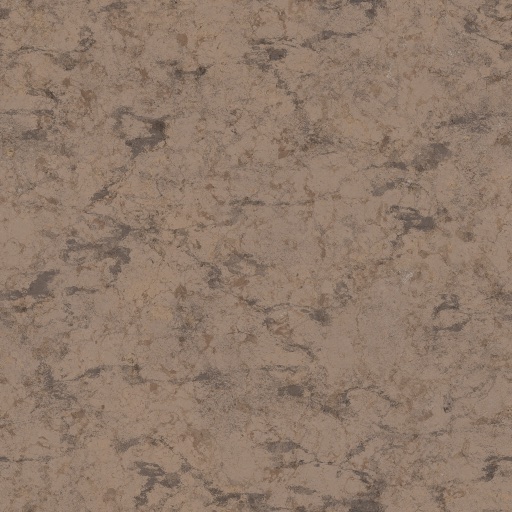
Marble, travertine and slate tile
Best if you want the real material and accept that it ages
Cut stone, not a picture of it; the depth shows. The trade-off: stone is porous and mostly soft. Marble etches: lemon, wine, tomato or a vinegar cleaner leave dull marks no sealer prevents, because sealer slows staining, not acid. Travertine has natural holes, usually filled at the factory, that can reopen. Slate has a split, uneven face that grips well; some slates flake at the surface.
On a floor, honed beats polished: polished stone by a sink is slippery wet and shows every scratch. On a backsplash, polished marble is lovely. Either way, seal it before grouting, since grout pigment can stain bare stone, and reseal when water darkens it instead of beading. The floor care guide covers cleaning; the same etching applies to a marble counter, as marble vs quartz explains.
- A chip shows more stone, not another body
- Can be honed and resealed instead of replaced
- Needs sealing, and resealing
- Marble etches; colour varies box to box
“Natural stone” on a tag tells you little. Two questions matter: does it react to acid, and how open is it?
- Marble and limestone are calcium carbonate, which kitchen acids dissolve. They etch, sealer or not — most visibly on a polished face, least on honed, which is the best argument for honed marble near food
- Travertine is limestone’s cousin, full of natural holes. Filled travertine looks solid at first; over the years some fill can work loose and the holes reappear, catching crumbs
- Slate has a split face that grips when wet and hides dirt. Some slates shed thin flakes for a while; a good one does not. Gauged slate is ground to an even thickness; ungauged slate takes a patient setter
- Granite tile is the least fussy stone: kitchen acids do not etch it, and it needs sealing far less often
A simple test beats the tag. Take a sample home and leave water, a drop of cooking oil and a slice of lemon on it for ten minutes. Water that darkens it means regular sealing; an oil shadow means every splash from the pan will show; a dull ring under the lemon means it etches. Then decide whether you like it anyway — plenty of very old stone floors look better for their marks.
The trade’s quiet warnings: pale stone can be stained from behind by grey mortar or grout pigment, so setters use white setting material and seal before grouting. And some green and very dark marbles can curl when set with ordinary water-based adhesive, so setters treat them as a special case. If your stone is unusual, ask whether the setter has laid it before.
Glass tile
Glass
Best for a bright, reflective backsplash, usually in small formats
Glass is completely non-porous: grease wipes off and it never needs sealing. It bounces under-cabinet light around like no other tile, which is either the point or too much, depending on how the kitchen is lit.
How it fails: it is the hardest tile here to cut and set well. It chips at the cut, needs a wet saw with a glass blade, and because it is translucent, trowel lines in the adhesive show through unless the installer uses a white adhesive made for glass. Sanded grout can scratch it. Nearly all glass tile is sold for walls.
- Non-porous; wipes clean behind the range
- Reflects light; colours stay vivid
- No sealing
- Hard to cut; edges chip
- Adhesive shows through if done carelessly
- Wall tile, nearly always
Glass is not one tile either. Much of it is clear glass coloured on the back, which is where its depth comes from — and why grey mortar or uneven ridges behind it show through. Glass tinted all the way through, including most recycled glass, is more forgiving. Hold a tile up to the window and look at the back: if the colour is a coat, the setting material is part of the finish.
The quiet weakness is the cut edge, and a backsplash is mostly edges: every outlet, every end, the line under the cabinets. A chipped cut on glass catches the light. That is why glass so often comes as a mosaic on mesh — fewer cuts through glass — and why this is the backsplash where a setter who does it often saves money rather than costing it.
Cement tile, often sold as encaustic
Cement / encaustic
Best for a bold pattern on a floor, if you accept that it will change
Cement tile is not fired. Coloured cement is pressed into a mould over a plain cement backing and left to cure, so the pattern runs a few millimetres deep instead of sitting in a glaze. It wears in rather than through; its fans call the scuffs patina.
It is also porous and acid-sensitive. It is sealed before grouting, so grout cannot stain the face, and resealed on a schedule; unsealed, it drinks oil and wine. It is thick and heavy. On a backsplash it is happiest away from the range, where grease tests how faithfully you keep it sealed.
- Graphic patterns that hold up underfoot
- Wear reads as character
- Must be sealed, then resealed
- Heavy, thick and slow to install
Real cement tile is easy to tell from the porcelain that copies it. Look at the edge and the back: cement tile has a grey cement back with the coloured layer visible on the edge, it is heavy, and it feels slightly chalky before sealing. Patterned porcelain has a thin printed glaze over an even body. Both are honest; they just age differently. The porcelain looks the same in ten years. The cement tile looks lived on.
Its quiet weakness is the first week, not the tenth year. Unsealed, it drinks anything, including the grout being worked into the joints, so dark grout on pale unsealed tile can stain it for good. Setters seal first, choose a grout close to the tile and clean as they go. After that: a pH-neutral cleaner — vinegar and many bathroom cleaners are acids that dull it — and fresh sealer whenever water stops beading.
Handmade tile, zellige-style
Handmade glazed tile
Best for a backsplash with life in it, away from the hardest-working spot
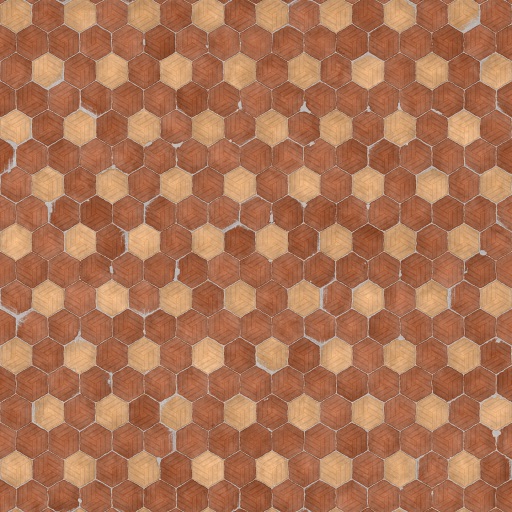
Traditional zellige is small, hand-cut, glazed terracotta: no two tiles the same thickness or shade, faces that undulate, edges chipped on purpose. Set tight, it shimmers as flat tile never does. Machine-made “zellige-look” tile copies the colour variation on a flat, even body.
The real thing has a soft, porous body and a glaze that often crazes, and many installers seal it. It is a wall tile. The uneven face that makes it beautiful at the sink end makes it slow to wipe behind the range, where a flat glossy tile cleans in one pass.
- Depth and shimmer nothing printed matches
- Chips are part of the look
- Soft, porous body; often sealed
- Uneven faces hold grease; wall only
Here is what the photographs leave out. Genuine handmade tile arrives with some breakage and a spread of thicknesses, and much of the setter’s job is sorting: culling cracked pieces, blending shades so no patch reads darker. Order more than the area, more than for machine-made tile, and ask the seller how much breakage to expect. It is often laid with almost no joint, which is what makes the wall shimmer.
To tell real from look-alike, lay a few tiles face up on a flat counter and press each corner. Real handmade tile rocks. Machine-made “zellige-look” tile sits flat, every piece the same thickness. The look-alike is easier to set and to clean, and behind a range it is often the better choice even for someone who loves the real thing at the sink.

How tile really fails: a week, a year, ten years
Tile does not wear out the way wood or vinyl does. It fails in a few particular ways, and most of them show in the first year.
The first week is grout haze and lippage. A cement film left on the face dries to a dull bloom that ordinary cleaners will not shift; on a dark tile it looks like fading. Run a bare foot across a new floor: a tile edge that catches now will catch for good.
The first month is the tap test. Roll a coin across the floor. A sound tile clicks; one with poor mortar contact answers with a hollow, papery note — tilers call it drummy — and when a pan finds its hollow corner, it cracks instead of chipping.
The first year is movement. The house dries through its first heating season, joists shrink, a slab settles. If the floor was not flat and stiff, or the tile was butted against the walls, this is when the straight cracks and loose grout appear.
Ten years is grout, the odd chip and very little else. What is left to compare is the same accident on three different tiles.
Under a fingernail they differ too: a soft, chalky floor you can scratch in ceramic, hard glass of the wrong colour in glazed porcelain, hard and nearly invisible in through-body. Stone chips into more stone; cement tile scuffs rather than chips. The more a chip would bother you, the more the body under the glaze matters.
A chipped tile can be replaced: grind out the grout, break the tile from the centre so the neighbours are untouched, scrape out the old mortar, set a spare. A spare from the same lot disappears. Any other is the one tile in the room that does not quite match.
Grout is its own decision
Glazed tile barely notices a spill; the grout does. A backsplash of 3″ × 6″ subway tile has about six feet of grout line in every square foot of wall, and that is where a kitchen’s life collects. So grout deserves as much thought as the tile, and it comes down to four settings.
- Cement grout, sanded or unsanded. The ordinary kind. Sanded for joints of about 1/8″ and wider, where the sand stops it shrinking and cracking; unsanded for narrower joints, and for glass and polished stone that sand could scratch. Both are porous: seal once cured, and again when water soaks in instead of beading
- Epoxy grout. Resin rather than cement. It resists stains, needs no sealing and keeps its colour. It costs more and sets fast, so it rewards an installer who uses it often; on a kitchen floor and the range wall it is money well spent
- Joint width. Set by the tile, not by taste. Rectified tile can go tight; unrectified and handmade tile need the joint to absorb their variation. Force a narrow joint on a tile that varies and you get a wavy line
- Colour. A mid-grey, or a grout close to the tile, hides a kitchen’s life far better than bright white, which on a floor is a promise to scrub. Strong contrast shows every crooked line — a showroom favourite and a setter’s least favourite
And one thing grout should never do: fill a joint that moves. Where tile meets the countertop, at inside corners, and where floor tile meets the wall or the cabinets, the joint gets a flexible sealant colour-matched to the grout. Grout there cracks within a year. Caulk lasts until somebody cuts it out.
What is under the tile matters more than the tile
Tile is hard and brittle; it does not bend, it breaks. When the trade looks for the cause of a cracked floor, the list runs in a steady order: the floor flexed, it was not flat, the mortar did not cover the back of the tile, the tile was locked in against the walls. The tile itself comes a distant last.
- Stiff. A floor that bounces when someone jumps cracks grout, then tile. Tile wants a stiffer subfloor than vinyl or wood, and natural stone stiffer still — the usual rule asks roughly twice the stiffness. On joists, that often means a second layer of plywood
- Flat. Large-format tile wants a flatter floor than small tile; the usual standard is within about 1/8″ over 10′. Humps are ground and dips filled before tiling, not hidden in extra mortar. Long plank tiles are offset about a third, not half, so their slight bows do not stack up
- A proper base. Tile does not go straight onto wood. It goes on cement backer board screwed down on a tight pattern, or on an uncoupling membrane — a thin waffled plastic sheet that lets subfloor and tile move a little independently. On a slab, the membrane keeps a slab crack out of the tile
- Room to move. Tile grows and shrinks slightly with heat and moisture. Installers leave a gap at every wall, hidden by the baseboard, and on large floors add soft joints of sealant. A floor tiled tight on all four sides is the one that tents — tiles lifting in a ridge — years later
Whichever tile you pick, these habits are worth more than the upgrade.
Dry-lay and centre first. Before any mortar is mixed, a good tiler lays tiles out loose on the floor and along the counter and shifts them until the layout is centred on the range or the sink, with no sliver cuts at the ends. The middle of the wall is rarely where the eye goes; the range is. Check the lot numbers and blend the boxes, pulling from several at once. Back-butter large tiles — a thin skim of mortar on the back of the tile as well as on the floor, so no hollow corner is left waiting for a dropped pan.
Caulk, never grout, where tile meets the counter and at every inside corner. Bring outlet boxes forward to the finished tile face before the tile goes up, so the cover plates sit flat. Buy about 10% extra, more for a diagonal or herringbone layout, and keep the leftovers, labelled with the lot number, for repairs. Seal stone and cement tile before grouting, so the grout cannot stain the face.
None of it costs much. All of it is invisible on the day the job is finished, which is exactly why it gets skipped.
The backsplash is an 18″ band, not a wall
A kitchen backsplash is not a showroom board. It is a band roughly 18″ tall between the countertop and the wall cabinets — the number the whole elevation is built on — interrupted by outlets, the hood and the window.
- Busy patterns get chopped up — outlets, a hood and a window interrupt the band before a large repeat finishes. Keep bold patterns for the floor; centre the layout on the range or sink
- Tile goes on after the countertop — the bottom course is cut to the counter as installed, never quite the drawing; the renovation order guide explains
- Decide outlet positions before tiling — ask the electrician to land each on a grout line or mid-tile, with the box brought forward to the finished face
- Behind the range is a different job — heat, grease and daily wiping. Flat glossy glazed tile or a slab cleans fastest; rough handmade tile and white cement grout slowest
- A slab is the no-grout alternative — the countertop material run up the wall, as a 4″ strip or full height to the uppers, leaves no joints to stain
- Decide where tile stops — in line with the last wall cabinet or at a wall corner, never in mid-air, with an edge piece or slim metal trim on an exposed edge. Under open shelves, go to the ceiling or a deliberate line
- Floor tile and the cabinets — tile is usually laid wall to wall first, cabinets on top. If it goes in after, tile, mortar and any membrane raise the floor, and the dishwasher opening must allow for that build-up
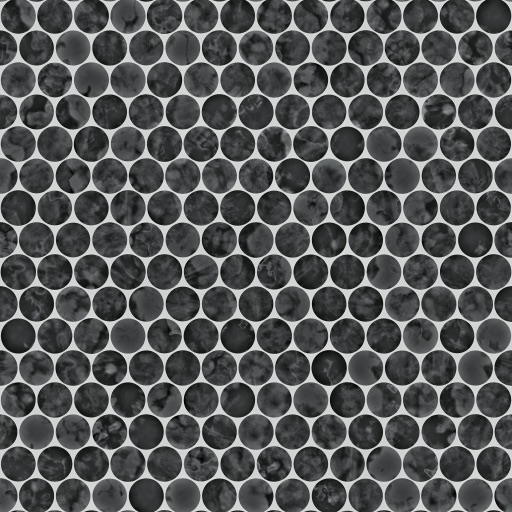
Mosaics are a format, not a material — small tiles on a mesh sheet, in any of the materials above. They fit around outlets easily, because you cut the mesh, not the tile. The trade knows two catches: sheet lines, a faint grid of slightly wider joints where the sheets meet, which raking light finds; and grout — a penny-round wall is nearly as much grout as tile. On a floor, check the rating and ask whether you can live with that many joints; they grip well and clean badly.
Five things the tile does not decide
A lot of what people blame on the tile has nothing to do with the tile.
- Whether the floor cracks. Straight cracks, loose grout and tiles that click underfoot come from the floor underneath, the mortar coverage and the missing gaps at the walls. A premium tile on a bouncy subfloor cracks as fast as a cheap one.
- Whether the backsplash looks dirty. That is the grout type, the grout colour and the number of joints. A plain white ceramic with epoxy grout stays cleaner than a costly stone mosaic with white cement grout.
- Whether the floor is slippery. That is the finish and the wet slip rating, not the material. Matte ceramic grips better than polished porcelain, and honed marble better than polished marble.
- Whether it feels cold underfoot. All tile feels cool to a bare foot because it draws heat away quickly. What changes that is the room’s heating and what lies under the tile; in-floor heating works under nearly every tile on this page.
- How long it lasts. On a sound floor, any properly rated tile outlasts the fashion it was chosen in. People replace kitchen tile because they are tired of it, very rarely because it wore out.
And one piece of language to watch for: “suitable for floors and walls.” On a box, that tells you the tile can be walked on in some room, not that it belongs in front of a kitchen sink. The PEI class and the wet slip rating are what tell you that, and both should be printed right beside the phrase.
How to tell what you are being sold
Tile shops are lit to sell tile: flat, dry displays, lit from above, grouted by someone with all day. Take a loose tile to the window, tilt it so the light rakes across, and look at the edge and the back. Then ask the questions that tell you more than the name:
- Is it rated for floors, and which PEI class? — no rating on the box means walls only
- What is the wet slip rating? — for anything going in front of the sink, the dishwasher or the back door
- Glazed, colour-body or through-body? — or more simply, what does a chip look like? Ask to see the edge
- Is it rectified, and what joint does the maker recommend? — the answer sets the look of the whole floor
- Are all my boxes from one lot, and can I see the shade and calibre codes? — before delivery, not after
- Will you take back unopened boxes? — this decides whether buying extra costs you anything
- Does it need sealing, how often, and with what? — stone, cement and handmade tile all have an answer; glazed porcelain should not need one
Our free planner does not lay backsplash tile, and we would rather say so than pretend. What it does show in 3D is everything the tile has to live with: a tile floor under your own cabinets — pick a stone look and a tile size — and the door colour and countertop the backsplash will sit between. Settle those first, then take a door sample and a countertop offcut to the tile shop and judge the tile against your door colour, not on its own.
We sell cabinets and engineered-quartz countertops, not tile. For no grout at the range at all, the planner’s countertop tool has a Backsplash setting — none, 4″ or full height — that draws and measures the stone wall panels; here is how.
What we would do, kitchen by kitchen
General rules are easy. Here is how the choice falls for the kitchens people actually have.
A family kitchen in a house you plan to stay in. On the floor, matte colour-body or through-body porcelain in a middle tone that hides crumbs and chips, with grout close to the tile. On the backsplash, whatever you love — nothing heavy hits a wall — but keep the stretch behind the range simple, with epoxy grout. Spend what you save on floor preparation; that is where a twenty-year floor is decided.
A condo. Porcelain on the floor, over whatever the building requires — many condo boards insist on a sound-rated underlay beneath hard floors, and some restrict tile. Check before you buy a box. A concrete building usually gives you flat, stable walls, the best place for larger backsplash tile.
A basement kitchen or a secondary suite. Through-body or colour-body porcelain on an uncoupling membrane over the slab, which keeps the slab’s cracks out of the tile. Mid-grey grout, epoxy if the budget stretches; a tenant will not be sealing anything.
A cottage, or anything left unheated in winter. Matte porcelain on a membrane, with proper gaps at the walls. A building that swings from frozen to warm moves more than a house does, and porcelain takes up so little water that freezing does not trouble it. Leave stone and cement tile for a house lived in all year.
A rental you own, or a house you are fixing to sell. A neutral glazed porcelain floor and a white ceramic subway backsplash with mid-grey grout. Not exciting, but easy to match when a tile cracks — and you will have kept a box from the same lot.
A small kitchen. This is the place to spend on tile. A galley backsplash may be a few dozen square feet, so handmade, glass or stone costs far less in total than in a large room. Spend it where you look every day.
Someone who cooks hard every day. Behind the range, as few joints as possible: large glazed porcelain, a slab, or epoxy grout at least. On the floor, matte porcelain with a little texture, and a body that hides the chip a cast-iron pan will make one day. A good mat by the stove does more for your back than any tile.
- A busy floor, a dog, the odd dropped pan. Matte through-body or colour-body porcelain, epoxy grout.
- A backsplash on a budget, tiled yourself. Glazed ceramic subway or square, with a mid-grey grout.
- The stone look without the sealing. Glazed porcelain with a stone print.
- The real stone, and you accept it ages. Honed on the floor, polished on the wall, sealed either way.
- A floor that is the whole design. Cement tile, kept sealed — or patterned porcelain if you will not.
- Shimmer and handmade character. Zellige-style on the wall, something flatter behind the range.
- No grout at the range at all. A full-height slab of the countertop material.
If you already have tile
Most kitchens do. A Saturday morning, and a few minutes on Sunday, takes care of most of what this page has described.
- Clean and seal the grout behind the range. Scrub the joints with a stiff brush and a degreaser safe for your tile, rinse, let them dry overnight, and brush on grout sealer on Sunday. If a drop of water still darkens a joint a week later, add a coat. Epoxy grout needs none of this.
- Re-caulk the counter joint. If it is grouted and cracked, rake the grout out with a utility knife or a grout saw and run a bead of sealant colour-matched to the grout.
- Tap the floor. Roll a coin across the tiles in front of the sink, the stove and the dishwasher. Note any that sound hollow; they are the tiles to protect with a mat, and the first to crack.
- Do the water test. A few drops on stone, cement tile and cement grout. If they bead, leave them alone. If the surface darkens within a few minutes, it is due for sealer.
- Look at the outlet covers. A crooked or sunken plate usually means the box sits behind the tile face. Power off at the panel first; a box extender ring is the usual fix, and if you are not comfortable with wiring it is a short visit from an electrician.
- Find the leftover boxes. Label them with the room and the lot number and store them somewhere dry. If there are none, find the old invoice or photograph a tile and track it down while it is still made.
The rest of the room has the same kind of decision waiting: tile against wood, vinyl and the other floors, marble or quartz on the counter the backsplash will sit on, and how to look after the floor once it is down.
Straight answers
Is porcelain or ceramic tile better for a kitchen floor?+
Porcelain, in most kitchens. It is fired hotter into a denser body that absorbs almost no water, and a through-body or colour-body porcelain hides the chip a dropped pan leaves. Floor-rated glazed ceramic works too, but a chip shows its different-coloured body. Either way, ask for the wet slip rating and choose a matte finish near the sink.
What is the difference between porcelain and ceramic tile?+
Porcelain is a type of ceramic tile made from finer, denser clay fired hotter, so it absorbs very little water — the usual definition is 0.5% or less. Ordinary ceramic has a softer, more porous body under a coloured glaze. Ceramic is easier to cut and suits walls; porcelain is harder and the better choice underfoot.
What is the best tile for a kitchen backsplash?+
For most kitchens, glazed ceramic or glazed porcelain in a simple format such as subway or square: they wipe clean and come in every colour. Glass and handmade tile add character. Behind the range, choose something flat and easy to wipe with few grout joints, or run a slab of the countertop material up the wall.
Can you use floor tile on a backsplash?+
Yes. Floor tile can go on a wall; it is the other way round that fails, because most wall tile is too soft for foot traffic. Check the weight, since large or thick tiles need the right adhesive on a wall, and the edges: floor tile rarely has finished edge pieces, so plan a metal trim wherever it ends in the open.
What PEI rating do I need for a kitchen floor?+
Class III at least, and Class IV if the kitchen takes heavy traffic, such as a back door, boots or pets. Classes 0 and I are for walls and Class II for light-traffic rooms like a bathroom. The PEI scale grades glazed tile only; through-body porcelain is rated a different way and is about as hard-wearing as tile gets.
Is porcelain tile slippery when wet?+
Polished porcelain can be, so avoid it in front of a sink or dishwasher; matte and textured porcelain grip much better. Do not judge a dry sample: ask for the wet slip rating, usually quoted as DCOF in North America, where 0.42 or higher is the common benchmark for a level indoor floor walked on wet.
Is marble tile a good idea in a kitchen?+
On a backsplash, yes, if you seal it and accept some ageing. On a floor, choose a honed finish rather than polished, because polished marble is slippery when wet and shows scratches. Either way marble etches: lemon, wine, tomato and vinegar cleaners leave dull marks that sealer does not prevent. If that would bother you, choose a marble-look porcelain instead.
Is epoxy grout worth it in a kitchen?+
On the floor and behind the range, usually yes. Ordinary cement grout is porous, darkens with grease and needs sealing. Epoxy grout resists stains and never needs sealing. It costs more and sets quickly, so it is harder to work with; hire an installer who uses it regularly, or practise on a small area first.
Why is my tile floor cracking in a straight line?+
A crack that runs straight across several tiles almost always comes from below: a seam between subfloor sheets, a crack in the concrete slab, or a floor that flexes between joists. The tile is only reporting the movement. Replacing the cracked tiles without fixing the cause brings the crack back, so have a tiler check the floor first; a slab crack is often bridged with an uncoupling membrane.
Do you need to seal porcelain tile?+
Glazed porcelain, no: the glaze is already impervious. Unglazed through-body porcelain rarely needs it, though some polished porcelain is treated at the factory because polishing can open tiny pores in the surface; follow the maker’s instructions. What does need sealing is cement grout, and porous materials such as natural stone and cement tile. Epoxy grout needs no sealer.
See the floor under your own cabinets.
Put the counter, the doors and the floor together in a 3D view of your actual kitchen before you buy a single box of tile.
Open the 3D planner →