The Best Kitchen Floor, Honestly Compared
We don’t sell floors. We set cabinets on all six of them, so we see each one where it is weakest — under the dishwasher, in front of the sink, at the doorway. Here is how each floor wears, how each one fails, and which one we would put in which kitchen.
The most honest patch of floor in a kitchen is the one under the dishwasher. Turn off the water and the power, back out the two screws into the counter, slide the old machine out on a sheet of cardboard for the first time in twelve years — and the floor that has been hidden since the day it went in is suddenly lying in daylight beside the floor everybody walked on. Between them they hold the whole history of the room: every slow weep from a hose clamp, every chair dragged over to the sink. An installer reads that patch the way a mechanic reads a worn tire. And every material on this page writes that record in a different hand.
For most kitchens the best floor is porcelain tile or a rigid-core vinyl plank. Porcelain is the only floor that shrugs off standing water, heat and decades of traffic, but it is hard, cold and a skilled install. Rigid-core vinyl is waterproof as a plank, warm, quiet and a realistic DIY job, but it dents under point loads and cannot be refinished. Engineered hardwood is the choice if you want real wood; laminate if the budget leads. Whichever you pick, settle its finished thickness before the cabinets go in.
Read an old kitchen floor before you buy a new one
If you are replacing a floor, the old one is the best advice you will get. Before anything is torn up, look in six places. This is what tear-out crews find over and over, and the pattern barely changes from house to house.
- Under and in front of the dishwasher. Laminate shows it first: the plank edges have risen into ridges you can catch with a fingernail. Solid hardwood has cupped — run your palm across the boards and the edges stand higher than the middles, like a shallow washboard. Vinyl plank usually looks perfect. Lift one plank at the wall and look at the plywood under it: often a dark stain, sometimes a soft patch or a smell. What it tells youThe dishwasher, not the sink, is where floors meet the water nobody sees. A plank that is waterproof on top tells you nothing about what is under it.
- In front of the sink. Look across the floor toward a window. On a site-finished wood floor there is a grey lane the shape of the cook’s feet, where the finish has worn through to bare wood. On cheap vinyl or laminate the same lane is a washed-out patch where the print is fading, because the clear wear layer has been walked off. What it tells youWear happens in a lane, not across a room. That one strip decides when the whole floor looks old.
- Under the fridge feet and the stools. Roll the fridge forward and look for round craters where its feet stood; on vinyl they are often deep enough to catch a fingernail. Under the island stools: on wood, a fan of fine scratches; on soft vinyl, small dents in a neat square. What it tells youPoint loads, not footsteps, mark the soft floors.
- Along the stove. On tile, the grout lines beside the range are darker than across the room — cooking fat settles there and cement grout soaks it up. Look also for a crack that runs through several tiles in a straight line. Very often it sits right over a seam in the subfloor, which moved when the tile could not. What it tells youTile does not wear out; it fails at its grout and at its base.
- The doorway. Where two floors of different thickness meet, there is a lip, a reducer strip that rocks underfoot, or a ramp of filler — and often a scuff on the bottom of the door where it started to drag. What it tells youThickness is a decision for the whole floor plan, not only the kitchen.
- The toe kick. If the floor was laid after the cabinets, it runs up to the kick and the kick looks short — and the dishwasher opening lost the same height. That is often why the old machine was jammed in with its legs wound all the way down. What it tells youThe order of work matters as much as the material.
Now notice what you did not find. The middle of the room — the open floor around the island, the corner where nobody stands for long — is fine, in every one of these floors, often after twenty years. That is the whole comparison in one afternoon: a kitchen floor is chosen for the dishwasher, the sink, the fridge feet and the doorway, and for nothing else nearly as much.
What they search at midnight “vinyl plank vs laminate vs tile kitchen” — the honest answer starts with what is under your dishwasher.
Six floors, side by side
| Floor | Spill / overnight puddle / slow leak | Dents & scratches | Underfoot | Install | When it’s worn | Typical thickness |
|---|---|---|---|---|---|---|
| Solid hardwood | Fine / edges lift / cups | Dents; scratches show in the finish | Warm, some give | Nailed, a trade | Sand & refinish, several times | ¾″ (19 mm) |
| Engineered hardwood | Fine / risky / core swells | Same as solid | Warm, some give | Nail, glue or float | Refinish if the top layer allows | ⅜–¾″ (10–19 mm) |
| Laminate | Fine / depends on rating / core swells | Resists scratches best of the wood looks | Firm, can sound hollow | Click, DIY | Replace planks | about ½″ with underlay |
| Vinyl plank (LVP, SPC, WPC) | Fine / fine / subfloor at risk | Dents under point loads | Warmest, quietest | Click or glue, DIY | Replace planks | about ¼″ (4–8 mm) |
| Porcelain / ceramic tile | Fine / fine / subfloor at risk | Hardest; cracks if hit | Hard, cold, loud | Thinset, a trade | Replace single tiles | ½–¾″+ with base |
| Natural stone tile | Fine if sealed / mostly / subfloor at risk | Soft stones scratch, etch | Hard, cold | Thinset, a trade | Hone, repolish, reseal | ¾″+ with base |
No prices here on purpose — flooring pricing swings with the product, the wear layer, the subfloor work and who lays it. Ask what a quote includes: removing the old floor, levelling, underlay or backer, and transitions are the lines that move it.
On laminate and vinyl you walk on layer 1 over layer 4: a clear wear layer over a photograph. The thickness of that wear layer is what you are paying for — when it wears through between the sink and the stove, there is nothing underneath to sand back to. Engineered wood is real wood only as deep as layer 2. Only solid wood and tile are the same material all the way down.
Note too that the tallest and shortest columns are nearly half an inch apart. That difference ends up in the dishwasher opening, the toe kick and the doorway — section 09 follows it there.
Solid hardwood — and why “hardwood” is not one floor
Solid hardwood
Best when you want a floor that can be sanded back to new, more than once
Tongue-and-groove boards of solid timber, usually ¾″ (19 mm) thick, nailed to a wood subfloor. Being wood all the way through, it can be sanded and refinished several times — scratches, a grey traffic lane and a colour you are tired of all leave with the old finish. It is warm, has a little give, and still reads as quality.
How it fails: water and dents. An overnight puddle at a seam lifts the edges; a slow leak under the dishwasher cups the boards and can mean replacing a patch. Solid wood is generally not laid on concrete or below grade, and many makers advise against it over radiant heat.
- Refinishable several times
- Warm, with a little give
- Standing water lifts edges; a leak cups it
- Softer species dent easily
- Needs a wood subfloor; a poor match for radiant heat
Here is what the word leaves out. “Hardwood” on a quote covers four separate decisions, and the person selling it may mention only one of them.
- Solid or engineered. From the top they are the same floor. Solid is one piece of wood ¾″ thick; engineered is a layer of real wood over a plywood core. That decides how often it can be sanded and what it can be laid on — engineered has the next section
- Site-finished or factory-finished. A site-finished floor goes down raw, is sanded flat and gets its finish in the room, so the finish bridges the seams and a spill sits on one continuous film — at the price of days of dust and smell. Factory-finished boards arrive with a harder finish and can be walked on the same day, but each usually has a small bevel along its edges, and every bevel is an unsealed seam
- Species. The trade measures hardness by how hard you must push to drive a steel ball into the wood. In plain words: red oak is the middle of the road; white oak is a little harder and its closed grain takes up water more slowly; maple and hickory dent less; walnut, cherry and most pine mark easily
- Width and sheen. Wide boards show their seasonal gaps and cupping more. Gloss shows every scratch; matte and wire-brushed surfaces hide them
Hardness is not scratch resistance. Maple dents less than oak under a dropped can, but the scratches you see on any wood floor are almost all in the finish, not the wood. A matte oak floor often looks better after five years than a glossy maple one.
And the water a hardwood floor fears most is not a spill; it is the season. In a Canadian winter, with the furnace running for months, solid boards shrink and thin gaps open; in a humid August they close again, and with no room to close into, they cup. Installers meter the boards and the subfloor before a nail goes in. A humidifier that holds the house steady does more for a wood floor than any upgrade on the box.
When a floor has cupped from a leak, the trade’s advice is dull and right: stop the water, dry the room, and wait; many settle most of the way back. Sanding it flat while still wet leaves it crowned for good once it dries. And catch the grey lane early: before it reaches bare wood, a site finish can usually be screened and recoated — a light scuff and a fresh coat, no sanding. Many factory finishes are harder to recoat; ask the maker what they allow.
Engineered hardwood — the top layer is the floor
Engineered hardwood
Best for real wood over concrete, over radiant heat, or as a floating floor
A top layer of real wood glued over a cross-laminated plywood or composite core. The cross-grain core makes it far more stable than solid wood through humidity swings, so it can be glued to concrete, floated, or laid over radiant heat within the maker’s limits.
Its future depends on the thickness of that top layer. Very roughly: a veneer of a millimetre or less cannot be sanded at all; around 2 mm may take one careful sanding; 3–4 mm and up can be refinished a few times. The face dents and scratches exactly like solid wood — it is steadier, not tougher.
- Real wood face, far more stable
- Concrete, often radiant heat; nail, glue or float
- Refinishes limited by the top layer — some get none
- Dents and scratches like solid wood
- A leak underneath ruins the core
Two engineered floors can look identical on the showroom wall and have completely different lives ahead of them, because everything you will ever be able to do to the floor lives in the top few millimetres. A thick top layer is a hardwood floor that happens to sit on plywood. A very thin one is a finish that will be replaced, not repaired, when the lane in front of the sink wears through.
You can see it yourself. Ask for an offcut and look at its end: the real wood is the band of different colour and grain at the top. If it is thinner than a coin, nobody is sanding it. Then ask the number in millimetres — a seller who cannot tell you is telling you something. Look at the core too. Most is cross-laid plywood; some is fibreboard much like laminate’s, and that core swells at the edges the way laminate does. Neither is waterproof.
Nailed or glued down, engineered wood is quiet and solid underfoot. Floated, it suits concrete but sounds a little hollower and brings the floating-floor rules in section 09 with it. The quiet weakness is the first refinish: a sander who does not know how thin the top layer is can go through it in one pass at a worn spot, and there is no fixing that.
Laminate — it has changed, but its core has not
Laminate
Best when the budget leads and the kitchen stays fairly dry
A photograph of wood or stone under a clear, hard melamine wear layer on a high-density fibreboard core — much like a melamine cabinet panel. The surface is the most scratch-resistant of the wood looks: claws and chair legs that mark a wood finish barely touch it. It clicks together and floats on an underlay, so it is a realistic DIY floor, and usually the least expensive wood look.
How it fails: through the edges. Water that gets into a joint swells the fibreboard core, and a swollen edge never goes back down. Wear is rated AC1 to AC5: for a kitchen look for AC3 or higher, AC4 with dogs and a back door.
- The toughest wood-look surface
- Least expensive; a weekend DIY job
- Water at a joint swells the core for good
- Cannot be refinished
- Hollow sound without a good underlay
If your picture of laminate is a shiny, plasticky floor that went soft by the dishwasher within two years, that picture is partly out of date. Better boards now have denser cores, tighter click joints, edges treated to repel water, and a surface embossed to follow the printed grain. In a dry room a good laminate wears very well.
What has not changed is the core. It is still wood fibre pressed with resin, and it still does what wood fibre does when it gets wet at a cut edge: it swells, the joint peaks into a ridge, and it never goes back down. Our plywood vs particle board page tells the same story about cabinet boxes.
- The AC number is about wear, not water. AC1 to AC5 says how long the surface stands up to abrasion in a lab test. AC3 for a kitchen; AC4 with dogs or a back door. It says nothing about the edges
- “Water-resistant” laminate is rated for a time. Sealed-edge products are tested with water standing on a joint for a stated number of hours. Read that as the time you have to find the puddle — a delay, not a cure, and a test of water on top, not of a hose weeping underneath
- The underlay decides the sound. On thin foam a floating laminate rattles under hard shoes; a denser underlay fixes most of it
Laminate fails at the same three edges in nearly every kitchen: in front of the dishwasher, in front of the sink, and at the fridge, where an ice-maker line can drip unseen. So keep a box. A damaged plank near a wall can be unclicked and replaced; one in the middle of the room can be cut out and a new one glued in. With no spare from the same run, you are matching a photograph by eye.
Vinyl plank is three different products
Luxury vinyl plank, SPC and WPC
Best for most busy family kitchens, and for doing it yourself
A printed film under a clear wear layer on a vinyl body, sold as click planks or glue-down planks. The plank is waterproof: a puddle left overnight does nothing to it. It is the warmest, quietest hard floor here, and most products allow radiant heat within a surface-temperature limit — check the product’s limits.
How it fails: point loads. A fridge on its wheels or a dropped knife can dent or gouge it, and it cannot be refinished. And the planks are waterproof, not the floor: water through the joints or edges reaches the subfloor.
- Waterproof planks
- Warm, quiet, thin, DIY friendly
- Water still reaches the subfloor through joints
- Dents and gouges under point loads
- A worn wear layer cannot be renewed
“Vinyl plank” on a flyer can mean any of three floors with different cores, and the core decides how it feels, how it dents and what it needs underneath.
- Flexible LVP. Thin and bendy, usually glued down. Soft underfoot, but it shows every bump in the subfloor — a nail head, a ridge of filler, a plywood seam all come through as shapes in the planks
- Rigid-core SPC (stone-plastic composite, mostly limestone and PVC). Dense, heavy and stiff. It bridges small dips, clicks together, and resists dents best of the three; it is also the hardest and coolest underfoot
- Rigid-core WPC (a foamed composite core). Lighter, softer, warmer and quieter — and it dents more easily. Press a thumbnail into the cut edge of a sample beside an SPC one and you will feel which is which
On all three, the number that matters is the wear layer, not the total thickness. The wear layer is the clear film over the print, sold in mil — thousandths of an inch. Around 12 mil is entry-level; around 20 mil, about half a millimetre, is the usual pick with children or dogs. An 8 mm plank with a thin wear layer is a thick core under a thin skin: the extra millimetres buy stiffness and quiet, not wear. Many boxes print only the big number; the spec sheet has both.
“Waterproof” describes the plank, not the floor and not the subfloor. Water that runs into the joints or under the baseboard reaches the plywood below, and vinyl then keeps that water in. Wood under a breathable floor can dry. Wood under a plastic plank stays damp.
Vinyl’s worst failure is the one you cannot see. A slow dishwasher leak can sit under it for months while the planks stay perfect, and the first sign is a spot that feels soft or springy underfoot, or a musty smell at the toe kick. By then the plywood is the problem. Vinyl kitchens are the ones that most need a leak alarm beside the dishwasher.
Two smaller habits. If the planks have a pad attached, do not add a second underlay unless the instructions allow it — a soft double layer lets the click joints flex until they break. And rigid planks still move with heat: in front of a big, sunny patio door is where gaps and buckling show up first.
Two thin floors are left off this list. Sheet vinyl has one seam or none, so a spill stays on top, but it tears when an appliance is dragged over it and reads as dated. Cork is warm, quiet and kind to legs; it dents, fades in sun and dislikes standing water.
Porcelain or ceramic tile — the quality is in the part you never see
Porcelain and ceramic tile
Best when water, heat and decades of traffic are the brief
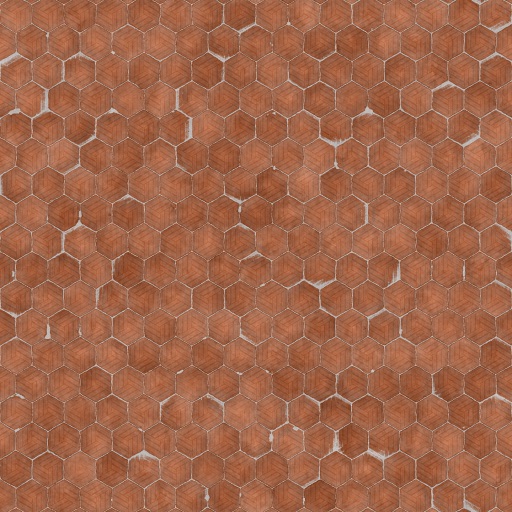
Fired clay set in thinset mortar. Porcelain is the denser, harder-wearing floor choice; glazed ceramic is softer and fine in a quieter kitchen — porcelain vs ceramic tile has the detail. Either way, a puddle, a hot pan or a wet dog cannot hurt it, it scratches far less than anything else, and on a stiff enough base it lasts as long as the house.
How it fails: the subfloor and the drop. A floor that bounces cracks tile and grout, so tile wants a stiff, flat base — often a cement backer board or an uncoupling membrane — and that is a trade, not a weekend. A pan landing edge-first can crack a tile; keep spares from the same batch. It is hard, cold, loud and unkind to dropped glasses. A slow leak will not hurt the tile, but water still travels through the grout to the subfloor. Tile is the best partner for radiant heat, which fixes the cold.

- Waterproof, heatproof, hardest-wearing
- The best match for radiant heat
- Hard, cold, loud; breaks what you drop
- Cracks if the base flexes or a pan lands on an edge
- A skilled install and the thickest build-up
The tile itself is rarely the problem. The same porcelain laid by two different people can last the life of the house, or have a cracked line across it by the second winter. The difference is under the surface: how stiff and flat the floor is, what goes between the subfloor and the tile, and how fully the mortar covers the back of each tile. The tile page covers the materials; in a kitchen, watch three things.
- The tap test. Tap a tile with a screwdriver handle. A good one sounds dull and solid; a hollow note means it is not fully bonded, and a hollow tile in front of the stove is the one that cracks when a pot lands on it
- The grout by the stove. Cement grout is porous and darkens where cooking fat settles. Sealing slows that down; epoxy grout, harder to lay, barely stains. Mid-grey hides more than white
- The edges of big tiles. Large tiles need a flatter floor. An edge that sits proud of its neighbour is felt in socks, and by a dishwasher being rolled out
Natural stone tile — chemistry and weight
Marble, travertine, limestone, slate, granite
Best when the floor is meant to be the feature
Real stone, every tile different, with a depth printed porcelain only imitates. Granite and slate are hard; marble, limestone and travertine are softer and porous.
How it fails: chemistry and softness. The calcium-based stones — marble, limestone, travertine — are etched by acids — lemon, vinegar, wine, tomato and many cleaners — leaving dull spots a wipe will not fix, and they need sealing on a schedule. Polished stone is slippery when wet; honed is the kitchen finish. It is heavy, wants an even stiffer subfloor, and is a professional install. Unlike porcelain, worn stone can be honed and repolished.
- Every tile one of a kind
- Can be honed and repolished
- Acids etch marble, limestone and travertine
- Needs sealing; polished stone is slippery
- Heavy, needs a very stiff base and a pro
People mix up two marks on stone. A stain is something soaking in — oil, wine, coffee — and sealing slows it down. An etch is acid eating the polish off the surface, and no sealer stops it. On a marble or limestone floor the etches arrive first in front of the sink and the fridge, as dull spots that look like water marks and do not wipe away. On a honed floor they hardly show.
Weight is the other thing. Stone is heavy and less forgiving of flex than porcelain, so the trade asks for a stiffer floor under it than under ceramic; in an older house that can mean work on the joists first. Slate is the tough one for a kitchen, though some slates flake at the surface; granite is harder still. The same trade-off for counters is in marble vs quartz.
How each floor really fails: a week, a year, ten years
A kitchen floor gets tested for water three ways: the spill you wipe up at once, the puddle nobody sees until morning, and the slow drip from a dishwasher hose that runs under the floor for months. Every floor here survives the first; the puddle separates them; the slow leak beats almost all of them, because it comes from below. Add time and traffic, and this is roughly how each floor ages.
The first week. Nothing, almost everywhere — except a first fine scratch in a glossy wood finish from a stool with no felt, or a wheel track in vinyl where the fridge was rolled back.
The first winter. Solid wood opens small gaps while the furnace runs and closes them in spring. Tile over a springy subfloor shows its first hairline crack, usually straight, over a joist or a seam. Laminate and vinyl look new.
Years three to five. The lanes appear: a gloss wood finish goes cloudy from sink to stove to fridge, and entry-level vinyl and laminate look washed out in the same path. If there has been a dishwasher leak, this is when laminate edges peak, hardwood cups and vinyl develops its first soft spot.
Ten years and after. Solid wood and a thick-topped engineered floor get sanded and look new again. Thin veneer, laminate and vinyl whose wear layer is gone get replaced — there is nothing left to renew. Porcelain looks much as it did, apart from the grout and the odd chipped tile. Stone has been honed or resealed and looks lived-in, which is the point of stone.
Most of these failures can be felt before they can be seen:
- A peaked laminate edge is a ridge your fingernail catches across the joint
- Cupped hardwood is a washboard under your palm
- A vinyl dent is a smooth-sided crater; a gouge has a sharp edge and a lighter colour inside
- Rotting plywood under vinyl is a spot that gives a little under your heel and does not anywhere else
- A debonded tile sounds hollow when tapped and sometimes moves very slightly when stood on at one corner
- An etch on marble feels very faintly rough to a fingertip, where the stone around it is smooth
What the floor changes for the cabinets
We set cabinets on all of these. Every floor has a finished thickness, and whether it runs under the cabinets or stops at them decides where that thickness ends up.
- Floating floors go up to the cabinets and the island, not under them. Laminate, click vinyl and floating engineered wood move with the seasons; most makers want them stopped at the cabinets, the expansion gap hidden behind the toe kick. A few rigid-core products allow cabinets on top — your floor’s instructions decide, as the floor care page says.
- Tile and nailed or glued hardwood can run under. Most installers prefer it: the dishwasher opening keeps its height. The renovation order page sets out both options.
- Decide the floor height before the cabinet height is set. If the floor will stop at the toe kick, level the run high enough to leave the dishwasher its opening above the finished floor — about 34½″ to the underside of the countertop for a standard machine; its installation sheet has the exact minimum. Too late? The dishwasher page has the fixes.
- Every appliance notices. A range comes up on its legs to meet the counter; a fridge under a wall cabinet loses the floor’s thickness from its top clearance — appliance numbers.
- The doorway is where thicknesses meet. Tile beside thin vinyl in the hall is a lip; plan the transition strip and check doors still swing clear.
- An island on a floating floor stands on the subfloor. It cannot be screwed through a floor that has to move, so any 2×4 blocking goes on the subfloor inside its footprint — how to anchor an island.
- Plan for the slow leak. It starts under the sink or dishwasher and ends up under the floor. A leak alarm in the sink base and beside the dishwasher is cheap insurance; if water has already reached the cabinet, see the water-damaged sink base page.
Whichever floor you choose, these habits are worth more than the next product up the shelf:
Check the subfloor for flat and for moisture before anything goes down. A long straightedge finds the dips; a moisture meter on plywood, or a moisture test on concrete, finds the water. Every floor here fails early on a bad base, and no product warranty covers the base. Leave the expansion gap, and never trap a floating floor. Laminate, click vinyl and floating engineered wood need room at every wall and cabinet — roughly a quarter inch is common; the instructions give the figure. Pinned under an island, the floor buckles or opens somewhere else.
Run tile or nailed hardwood under the dishwasher and the fridge, so both can come out without climbing a lip. Plan the transition at every doorway before choosing the thickness. And keep one unopened box, labelled. Floors are discontinued and batches change colour; one matching plank ten years from now is worth more than the whole box was the day you bought it.
One detail on our side helps. Flip base cabinets stand on adjustable legs behind a clip-on toe kick 4½″ high, so the run can be set to the height the finished floor needs. It does not change which floors may go under cabinets — the floor’s instructions decide that. The boxes themselves are compared on the plywood vs particle board page.
Five things the floor does not decide
A lot of flooring regret comes from expecting the product to do a job that belongs to something else.
- Whether a leak ruins the kitchen. Every floor here can be ruined by a leak that runs for months, and almost any floor survives one found in a day. How soon somebody notices decides it, not the word on the box.
- The resale price. You will hear that hardwood “adds value” and vinyl “cheapens” a house. What buyers react to is condition: a cupped wood floor at the dishwasher puts people off more than a sound vinyl one. Choose for the people living there, and keep it in repair.
- Whether it looks clean. That is colour, sheen and texture. A mid-tone, matte floor with some grain hides crumbs and paw prints for days. Very dark and very light floors show everything, in any material.
- Whether it squeaks, bounces or cracks. That is the subfloor and the install, and they decide more than the product. A squeak is a loose subfloor. A crack in tile is a floor that flexes. A floating floor that rattles is lying on dips nobody filled. A better product fixes none of it.
- Whether the cabinets end up level. No floor is perfectly flat. The cabinets are levelled on their legs or shims from the floor’s high point. The floor sets the starting height, not the level.
And the sales word to read slowly: “waterproof.” On a vinyl or laminate box it means the plank survives water on its surface. It does not mean the floor is sealed or the subfloor protected, and water from beneath is a different test altogether. Read “lifetime warranty” the same way: the fine print usually covers wear under normal use and excludes moisture from below, an uneven subfloor and an install that did not follow the instructions.
How to tell what you are being sold
A showroom board shows you the top millimetre of a floor, and everything on this page is underneath, so pick the sample up. Its end shows the wear layer, the real-wood layer, the core and any pad. Bend it: flexible vinyl bends, rigid core does not. Weigh it: SPC is heavy, WPC light. Then turn it over and read the back.
The name on the sample tells you which family. These questions tell you which member:
- What is the wear layer, in mil? — for vinyl, the one number that predicts the lane in front of the sink; around 20 mil with children or dogs
- How thick is the real-wood layer, in millimetres? — for engineered wood, that is how many sandings it has in it
- What is the AC rating, and what does the warranty say about water at the joints? — for laminate, AC3 or higher, and read the number of hours as a deadline
- What is the core? — plywood or fibreboard under engineered wood; SPC or WPC under rigid vinyl
- Can it go under cabinets, and over radiant heat? — the instructions decide both; ask to see them
- Who checks the subfloor? — flatness, moisture, and whether levelling is in the quote
- What is the finished height, with underlay or backer? — you need that number for the dishwasher opening and every doorway
We sell kitchen cabinets and engineered-quartz countertops, and nothing else on this page — no flooring, tile, stone or appliances — so we have no favourite here. What we do have is a free 3D planner: draw the room, set your cabinets and countertop, then switch the floor between wood, tile and stone looks under your own cabinet colours before you buy a box. The cabinet colour guide covers the pairings worth testing.
What we would do, kitchen by kitchen
General rules are easy. Here is how the choice falls for the kitchens people really have.
A family house you plan to stay in. Porcelain tile, if you can live with hard and cool — a washable mat at the sink, radiant heat if the budget allows. It is the floor most likely to look right in twenty years. If you want wood, choose engineered with a thick top layer or matte solid oak, and fit leak alarms the day it goes in.
A condo. Rigid-core vinyl or engineered wood over the concrete. Read the building’s rules first: many condos require an underlay with a stated sound rating. Tile is possible, but it is the loudest floor for the neighbours below.
A basement kitchen or a secondary suite. Rigid-core vinyl or tile, never solid hardwood. Slabs carry moisture, and the lowest floor is the first to take water when something upstairs lets go. Test the concrete, and pick a product rated for below grade.
A cottage or anything left unheated in winter. Tile on a stiff base, or a vinyl plank rated for unheated buildings — not every one is. Wood and laminate dislike a building that swings from frozen and dry to warm and damp.
A rental you own, or a house you are fixing to sell. Rigid-core vinyl with a 20 mil wear layer. It looks right, survives tenants, and a damaged plank is one plank. Leave the spare box with the house.
A small kitchen. The area is small, so the better floor costs less than people fear; buy the one you want. Or run the next room’s floor straight through: no lip at the doorway, and the room reads bigger.
Someone who cooks hard and stands for hours. Engineered wood or a WPC vinyl is kinder to legs than tile; if you choose tile anyway, stand on a proper cushioned mat. Matte, mid-tone and textured, because flour and oil will be on it daily.
- Water is the worry — children, dogs, an old dishwasher. Porcelain tile, or rigid-core vinyl with a 20 mil wear layer.
- You are laying it yourself. Rigid-core vinyl plank, or laminate rated AC3 or higher.
- You want real wood. Engineered with a thick top layer, or solid if spills get wiped promptly.
- It goes over concrete or radiant heat. Tile or stone first; engineered wood or vinyl within the product’s limits.
- The budget leads. Laminate with sealed edges, or an entry-level vinyl plank.
- The floor is the feature. Natural stone, honed and sealed — slate or granite if you cook with acids.
If you already have the floor
Most of what ruins a kitchen floor can be caught early. An hour on a Saturday covers it.
- Look under the dishwasher. Take off its lower panel and shine a flashlight underneath. Dry dust is good news. A tide mark, rust on the frame or a damp smell means a leak — find it before anything else.
- Put a leak alarm on the floor. One beside the dishwasher, one under the sink trap. They are cheap and turn a months-long drip into a one-day one.
- Pad the feet. Felt pads on every stool and chair leg, and wide cups under the fridge feet on vinyl or wood. Replace felt when it goes grey and hard; grit in old felt is sandpaper.
- Check the mat at the sink. Washable, and lifted now and then so the floor dries. On vinyl, many makers warn that rubber-backed mats can stain the surface.
- Walk the floor in socks. Feel for a ridge at the laminate joints, a soft spot in front of the sink, a tile that rocks or sounds hollow. Each is cheaper to fix this month than next year.
- Find the spare box. Label it with the room and the date. If there is none and the floor is still sold, buy one now.
The rest of the room has the same kind of decision waiting: marble or quartz on top, plywood or particle board in the boxes, and porcelain or ceramic if tile is where you are heading.
Straight answers
What is the best flooring for a kitchen?+
For most kitchens it is porcelain tile or a rigid-core vinyl plank. Porcelain shrugs off water, heat and heavy traffic but is hard, cold and a skilled install. Rigid-core vinyl is waterproof as a plank, warm, quiet and DIY-friendly, but dents under point loads and cannot be refinished. Engineered hardwood is the real-wood choice; laminate suits a tight budget.
Is vinyl plank or laminate better for a kitchen?+
Vinyl plank, in most kitchens. Its planks are waterproof, so an overnight puddle does no harm, while laminate’s fibreboard core swells if water gets into a joint. Laminate’s advantage is a harder surface that resists scratches from claws and chair legs. If you choose laminate, pick one rated for standing water and AC3 or higher.
Is engineered hardwood better than solid hardwood in a kitchen?+
Usually, yes. Its cross-laminated core is more stable through humidity swings, and it can go over concrete or radiant heat within the maker’s limits. Its face dents and scratches exactly like solid wood. The catch is refinishing: solid can be sanded several times, engineered only as often as its top layer of real wood allows.
Is luxury vinyl plank really waterproof?+
The planks are; the floor is not sealed. A puddle on top does no harm, but water that runs into the joints or around the edges can reach the subfloor, and a slow dishwasher leak can sit there unseen for months while the planks look perfect. Wipe spills up promptly and fit a leak alarm beside the dishwasher and in the sink cabinet.
What wear layer do I need on vinyl plank in a kitchen?+
Around 12 mil is entry-level and fine for a quiet kitchen. Around 20 mil, about half a millimetre, is the usual choice with children, dogs or a busy back door. The wear layer is the clear film over the printed image, and it decides how long the lane in front of the sink lasts. The total plank thickness is mostly core and says nothing about wear.
Should flooring go under kitchen cabinets?+
Tile and nailed or glued hardwood can, and most installers prefer it, because the dishwasher opening keeps its full height. Floating floors — laminate, click vinyl and floating engineered wood — usually should not: most makers want them stopped at the cabinets and island, with the expansion gap behind the toe kick. Your floor’s instructions decide.
Is tile a good floor for a kitchen?+
Porcelain tile is the most durable kitchen floor there is: waterproof, heatproof and very hard to scratch. The trade-offs are comfort and installation. It is hard, cold and loud, unkind to dropped glasses, and needs a stiff, flat subfloor and skilled setting or it cracks. Radiant heat and a good mat at the sink fix most of the comfort complaints.
Can you put hardwood flooring in a kitchen?+
Yes, as long as you accept that water is its weakness. Wipe spills promptly, keep a washable mat at the sink, hold the humidity steady, and fit leak alarms under the sink and beside the dishwasher. Choose a harder species such as oak, maple or hickory, and a matte finish, which hides wear far better than gloss.
What flooring works with radiant floor heating in a kitchen?+
Tile and stone are the best partners: they carry heat well and are not harmed by it. Engineered hardwood, laminate and most vinyl planks can also go over radiant heat within a maximum surface temperature set by each maker, so check the product’s limits before you buy. Solid hardwood is the most restricted.
What is the most scratch-resistant kitchen floor for dogs?+
Porcelain tile is the hardest surface and barely notices claws. Among the wood looks, laminate rated AC4 resists scratching best, and a rigid-core vinyl with a 20 mil wear layer is a close second that is also quieter and waterproof as a plank. Wood shows claw marks in its finish; a matte, wire-brushed oak hides them far better than a smooth gloss.
See the floor under your own cabinets.
Draw the kitchen, set the cabinets and the countertop, then try wood, tile and stone underneath before anybody opens a box — and before anybody pulls out a dishwasher.
Open the 3D planner →