Marble vs Quartz, Honestly Compared
We sell quartz and do not sell marble, so hold us to telling you where quartz loses. Here is how each surface really ages in a working kitchen — which marks it collects, exactly where, which ones can be fixed — so you can pick the failure you are willing to live with.
The morning after the first dinner in a new kitchen teaches more than any showroom. On a marble counter there is a dull ring beside the sink where a glass of red stood through dessert — exactly the shape of the glass, matte in a polished field — and it will not wipe off, because there is nothing on the surface to wipe: the surface itself has changed. On a quartz counter the mark is somewhere else. Beside the cooktop, where a pan sat for a minute while somebody looked for a trivet, there is a pale patch with a faint yellow cast, and that will not wipe off either. Two counters, two marks, opposite causes. Acid wrote the first into the stone. Heat wrote the second into the resin that holds the quartz together. Nearly everything worth knowing about this choice follows from those two marks.
Choose quartz if you want a counter that looks the same in ten years with nothing but soap and water: it does not etch, it resists stains and it never needs sealing, but its resin can scorch under a hot pan. Choose marble if you want the real stone and accept that it will change: lemon, wine, vinegar and tomato etch dull marks into the polish that no sealer prevents, and it scratches more easily — yet it takes heat far better. If you love the look but not the upkeep, marble-look quartz is the honest middle.
Read a ten-year-old counter before you choose a new one
If you can, find a marble counter and a quartz counter that have each been cooked on for about ten years — a friend’s kitchen, the house you are leaving. Do not judge it from the doorway. Bend down until your eye is level with the surface, look along it toward a window, and run your fingertips across it. Anyone who repairs old tops will tell you the marks gather in the same handful of places, and they are not the ones people worry about in the showroom.
- The ring zone, between the coffee machine and the sink. On an old marble counter this is a scatter of overlapping dull circles, each the size of a glass foot or a mug — wine, juice, coffee, the morning lemon water. From above they nearly disappear; at a low angle against the window they are the first thing you see. Slide a fingertip from the polish into a ring and it feels faintly less slick. What it tells youMarble records acid where people put drinks down, not where they cook. Coasters and a small tray under the coffee things do more than any sealer.
- The prep stretch. The two feet of counter where lemons get squeezed, tomatoes get cut and dressings get whisked has usually gone past separate rings into one even, matte patch with a soft border, like a worn rug on a polished floor. On a honed counter you may have trouble finding it at all. What it tells youEtching evens out. After enough years the working zone is one patch, not a hundred spots — that is the patina people talk about, and whether it reads as lived-in or worn out is a matter of taste, not of quality.
- Under the bottles. Lift the olive oil and there may be a dark crescent where drips sat for weeks: a stain, below the surface, darker rather than duller. Lift the hand soap or the spray cleaner and there may be a pale ring instead, because some soaps and plenty of household cleaners are acidic enough to etch. What it tells youDarker means absorbed — a stain, which a poultice can often draw out. Duller means dissolved — an etch, which has to be polished out. Knowing which one you are looking at is half the repair.
- The front edge, and the strip in front of the sink. Run a fingernail along the front edge near the sink and the cooktop: fine scratches where pots have been dragged over grit, and an edge gone softer and rounder than the rest. Then look at the narrow strip between the sink and the front of the counter. Water and cleaner stand there longest, and on marble it is the likeliest place in the kitchen for a hairline crack, often along a vein. What it tells youThe narrowest piece of stone in the room takes the most abuse. That is why good fabricators reinforce it before it ever reaches your house.
- Beside the cooktop, and where the slow cooker always sat. Now the quartz counter. Most of it looks almost new. Beside the burners, on the side the pans come off, look for a pale or faintly yellow patch — sometimes a crisp ring the size of a pan base. Then find where the slow cooker or the air fryer always lived: long, low heat can leave a broad, cloudy discolouration nobody sees until the appliance moves. Under a fingertip it usually feels like the stone around it. Nothing was removed; the resin changed colour. What it tells youQuartz does not wear; it gets marked, all at once, by heat. One minute without a trivet can matter more than ten years of cooking.
- The corners, the sunny end and the seam. The rest of the story is at the edges. A small chip on the corner at the sink or beside the dishwasher, where a heavy pot or the dishwasher door caught it. A seam whose filler has darkened a shade, or where one piece sits a hair above the other and catches a fingernail. And on some colours, a slightly warmer tone at the end under a sunny window, which you notice only when you lift the fruit bowl that has sat in the same place for years. What it tells youQuartz is hard but brittle at a thin edge, its seams are glue, and its binder is a plastic the sun can reach. All three have more to do with installation and placement than with the slab.
Now notice what you did not find. On both counters, most of the surface — the back third along the wall, the run under the wall cabinets where the toaster and the jars live, the end of the island where the mail lands — looks much as it did the week it went in. Neither stone wears out. Neither one fails structurally in ordinary use. The whole comparison fits in one line: marble gets marked by acid where people eat and drink; quartz gets marked by heat where people cook; everything else is detail.
What they search at midnight “marble vs quartz countertops” — marble marks from acid, quartz marks from heat. Pick the mark you can live with.
Marble and quartz, side by side
| Marble (natural) | Quartz (engineered) | |
|---|---|---|
| What it is | Metamorphic rock, mostly calcite | Ground quartz bound with resin and pigment |
| Lemon, wine, vinegar | Etches — dull marks in the polish | No reaction |
| Oil, coffee, wine left sitting | Can stain; sealer slows it | Resists stains |
| Hot pan | Tolerant | Can scorch, permanently |
| Knives and grit | Scratches fairly easily | Very scratch resistant |
| Sealing | Yes, on a schedule | Never |
| Strong sun | Colour is stable | Resin can yellow or fade |
| Every slab | Unique — approve the actual slab | Consistent within a batch |
| When it is marked | Etches and scratches can be honed and re-polished; many stains draw out | Chips fill well; a scorch does not come out |
| In ten years | A soft, used patina | Much as it was on day one, except where it was marked |
No prices here on purpose. Neither is the budget option, and the spread inside each is wider than the gap between them — premium marble-look quartz and an ordinary marble can land close together. Quote the exact slab.
Marble — and why “marble” is not one stone
Natural marble
Best if you want a living surface and accept that it will change
Marble is limestone that was buried, heated and squeezed until it recrystallised into mostly calcite — calcium carbonate — with other minerals forming the veins. Light goes a little way into it before it comes back, so good marble seems to glow. Every slab is different, and the veining runs through the block. It is comfortable with heat, and a cool marble slab has been the pastry-maker’s favourite for centuries.
The price is that marble records its life. Calcite is relatively soft and it dissolves in acid, so acids etch it, oils can stain it if it is not sealed, and knives and grit scratch it more readily than harder stone. None of it is structural, but it will not stay showroom-perfect.
- Real depth and translucency; every slab unique
- Handles heat well
- Etches and scratches can be honed and re-polished
- Etches from any acid, sealed or not
- Softer — scratches more easily
- Needs sealing; can stain from oil and wine
Here is what the word leaves out. “Marble” on a quote covers a family of stones that behave quite differently on a kitchen counter, and the name of the slab tells you less than four plainer facts about it:
- Calcite or dolomite. Most of the classic white marbles are mostly calcite. Some stones sold as marble are largely dolomite, a close cousin with magnesium in it, which is a shade harder and reacts much more slowly with kitchen acids. It still etches — just more slowly, and less deeply for the same spill. The stone yard often knows which they have; a drop of lemon on an offcut tells you for certain
- Polished or honed. Polished marble shows colour and veining at their richest, and an etch on it is a matte spot on a mirror. Honed marble is ground to a smooth matte finish, so an etch is a dull mark on an already-dull surface and mostly disappears. For a working kitchen honed is the forgiving choice; the trade is that it tends to take stains a little more readily, so sealing matters more
- What “sealed” actually means. A kitchen marble sealer is an impregnator: it soaks into the pores and stays there, invisible, so oil and wine soak in more slowly. It is not a coat on top, it does nothing about acid, and it wears out from the busiest spots first. “Sealed” on a quote usually means one application at installation. Many fabricators suggest resealing a kitchen roughly once or twice a year; a simple water test, further down, tells you when
- What was done to the slab before you saw it. Many marble slabs leave the factory with hairline fissures filled with resin and a fibreglass mesh glued to the back so they survive handling. That is normal practice rather than a defect, but it is worth knowing where the filled fissures run before anyone cuts a sink hole beside one
The finish on a marble counter is only partly the factory’s. The face arrives polished or honed from the slab plant, but every edge, every sink cutout and every seam is ground and finished in the fabricator’s shop to match it. A careful shop brings the edge to the same sheen as the top, so the profile reads as one piece of stone. A rushed one leaves the edge a little duller or a little glossier than the face, and on polished marble that line shows across the room. Ask to see a finished edge on the shop’s own work, in the finish you are buying.
The other thing fabricators know and showrooms rarely say: a polished marble counter can be honed, and a honed one re-polished, in place, years later. Marble’s softness — the very thing that lets it etch — is also what makes it renewable. A stone restorer can take a ten-year-old marble top back to an even finish. Nobody can do that for a scorched quartz one.
The patina question. Old European kitchens and bakeries have marble counters covered in soft etches that look wonderful, because the marks have blended into one even, worn sheen — the realistic ten-year picture. The people who are happy with marble wanted a surface that shows it has been cooked on. The unhappy ones see the single dull ring by the sink in the afternoon light, every afternoon. Both are reasonable people. Only one of them should buy marble.
Quartz — and why “quartz” is not one product
Engineered quartz
Best if you want the marble look on a counter you never have to think about
Quartz countertops are made, not quarried: crushed natural quartz mixed with a polymer resin and pigment, pressed and cured into slabs. The quartz is very hard and ignores kitchen acids; the resin fills every gap, so the slab is non-porous, does not etch, resists stains and never needs sealing. Wine, lemon and coffee wipe off. The sample is what arrives, and the range includes white-and-grey veined designs that look a lot like marble from standing distance.
Its failure is the opposite of marble’s, and it lives in the binder. A pan straight off the burner, or a slow cooker running for hours, can scorch the resin — a pale or yellowed mark that cannot be polished out. Heat and strong solvents are the two things the quartz care guide keeps coming back to.
- No etching, no sealing, very stain resistant
- Highly scratch resistant
- Predictable colour; marble-look designs available
- Hot pans can scorch it, permanently
- Not UV stable — indoors only
- A copy of marble, however good, is still a copy
So marble’s weakness is chemical and lives in the stone; quartz’s is thermal and lives in the binder. But “quartz” covers a range almost as wide as “marble” does — it just varies in places a showroom sample does not show you:
- The resin and the filler. Most of a slab by weight is ground stone; the rest is resin and pigment, and that small share is what makes it non-porous and also what heat and sunlight attack. The recipes are not all alike — the amount of resin, how fine the stone is ground, and in some newer products part of the quartz replaced by other minerals or recycled glass. Two slabs that look alike can take heat, sun and cleaners a little differently, which is why each maker publishes its own care rules. Read the ones for the slab you actually buy
- Veins on the face, or through the body. In some marble-look designs the veining sits mainly in the top layer: cut the slab, and the edge, the sink cutout or a mitred corner shows a plainer body with streaks that do not quite continue the face. In through-body designs the pattern carries down the thickness. Neither is wrong, but the first kind wants a simple edge and careful thought at every cut
- Which production run. Quartz is consistent within a batch and close between batches, not identical. Background tone and vein density can drift slightly from one run to the next, so a whole job should be cut from slabs of one batch — and a replacement piece years later may not quite match
- Thickness, and built-up edges. Slabs usually come as 2 cm (about ¾″) or 3 cm (about 1¼″). A 3 cm top is stiffer over overhangs and needs nothing under its edge. A 2 cm top can be given a heavier look with a built-up edge: a strip of the same slab laminated under the front so the edge reads deeper. Done well, the joint is a hairline. Done badly, it is a visible line of glue along the whole front, and on a veined design the strip rarely continues the pattern of the face
The quartz counter’s worst enemy is one you invite in yourself, and it is not a knife. It is the appliance that runs warm for hours — the slow cooker, the air fryer, the countertop oven. A pan off the burner makes a sudden mark, and people learn the trivet habit after the first one. The appliance is sneakier: it stands in the same spot week after week, never hot enough to make anyone nervous, and one day it is moved and there is a cloudy patch exactly its size. A wooden board under every heat-making appliance, from the first day, prevents it.
And one thing that belongs to the shop, not to you: do not cut, drill or grind quartz yourself, dry. The dust from cutting engineered stone carries fine crystalline silica, a well-known lung hazard, and good shops cut it wet, with extraction and proper masks. A finished, installed counter gives off nothing. That is the version that belongs in your house.
The single most misunderstood thing about marble
Most people who regret marble are not regretting a stain. They are regretting an etch, and they were told sealer would prevent it. It does not.
An etch is a chemical reaction. Lemon, wine, vinegar, tomato and many cleaners are acidic, and acid dissolves a thin layer of calcite on contact, leaving a dull, slightly rough patch the shape of the spill or the glass. Nothing soaked in; the surface itself changed, sometimes within minutes.
A stain is absorption: oil, coffee or wine wicks into the pores and darkens the stone from below. Sealer slows that a lot. But sealer sits in the pores, not on top as a coating, so acid still reaches the calcite — which is why a sealed marble counter can be stain-free and covered in etch marks at once.
How to tell which you have, by touch. Wipe the spot dry and tilt your head until the window light skims across it. An etch is lighter and duller than the stone around it, and on polished marble a fingertip drags very slightly as it crosses in. A stain is darker, and it feels like nothing at all, because it is underneath the surface. A water mark that vanishes as the stone dries was neither.
What to do about each. A stain can often be drawn out with a stone poultice. An etch cannot be cleaned off: light ones buff out with marble polishing compound, and years of them can be honed and re-polished by a restorer. Prevention: wipe acidic spills at once, use coasters and boards, and clean with a pH-neutral stone cleaner, never vinegar or citrus spray. Quartz does neither — its marks come from somewhere else entirely.
How each one ages: a week, a year, ten years
The brochures show both surfaces on installation day. Here is the rest of the film, for a kitchen that cooks most nights.
Marble, the first week. The first ring, usually from a glass, usually by the sink, visible only at a low angle. It is the worst moment of the whole ownership: one mark on a perfect surface. The first year. A dozen rings in the drinking zone, the prep stretch going faintly matte, fine scratches near the cooktop and — if nobody resealed — a dark crescent under the oil bottle. No single mark stands out any more, because none of them is single. Ten years. The working area has settled into one even, soft sheen; the full polish survives only along the back wall and under the appliances. The edge near the sink has rounded under the hand. If you hate it, a restorer can hone it back to even. If you like it, this is what you bought it for.
Quartz, the first week. Nothing. The first year. Usually still nothing. At most, a faint dull film in a busy spot where a cleaner that does not suit the resin, or a scouring pad, has been used; the right cleaner usually takes a film off. Ten years. Most of the surface is as it was on day one, and that is the whole case for quartz. What has changed has changed in single events: a scorch beside the cooktop, a cloudy patch where an appliance lived, a chip on a corner, a seam that has darkened. Marks on quartz do not blend into a patina. Each one stays exactly as sharp as the day it happened.
That is the real difference in temperament. Marble ages a little every day and evenly; quartz does not age at all until something happens to it, and then it keeps the mark. Which of those suits you says more about you than about the stone.
Heat, knives and sun, in plain words. A hot pan set down briefly will not hurt marble itself, though a trivet is kind to the sealer; on quartz the resin can scorch, and a sudden, concentrated heat can crack the slab across the narrow strip by a cutout. On the scratch scale geologists use, calcite sits at about 3 and quartz at about 7, with a steel knife in between — so a knife scratches marble, while on quartz the knife goes dull. And marble ignores sunlight, where quartz resin can yellow or fade in strong sun, which is why quartz stays indoors.
Marble-look quartz vs real marble
For most people the real decision is not marble against quartz. It is marble against quartz that looks like marble. Here is how to tell them apart in a showroom, and where the imitation holds up.
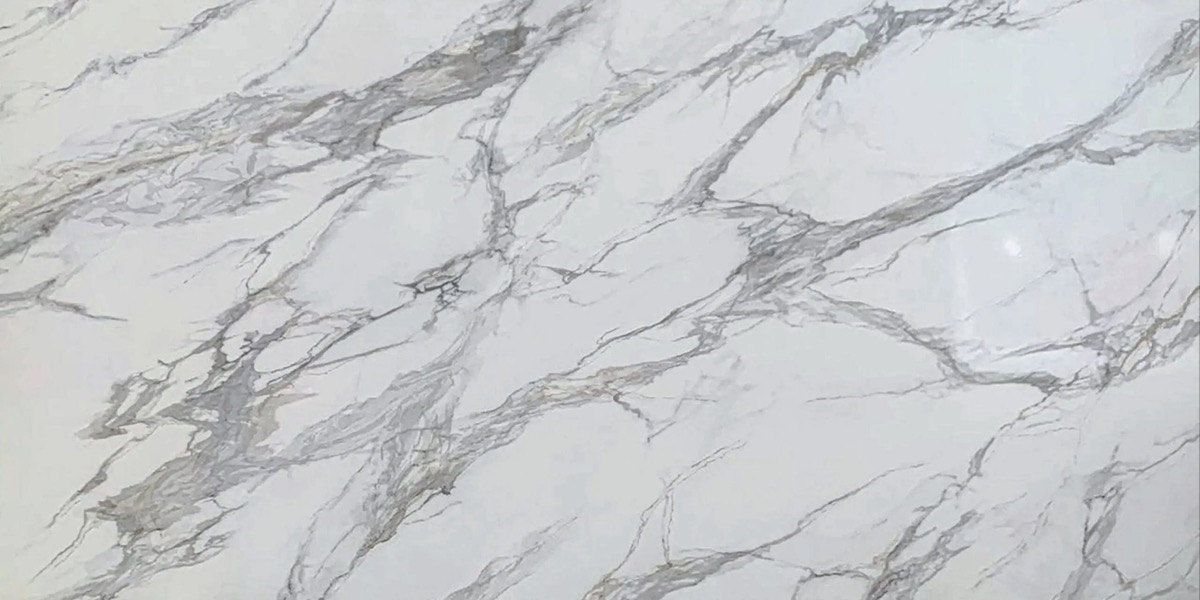
- Look for repeats — quartz is made to a recipe, so slabs of one colour share a pattern; marble slabs are related, never the same
- Look into the veins — marble veining has depth, soft irregular edges and crystal sparkle in raking light; quartz veining is usually crisper and flatter
- Check the edge — marble’s veins run through the block and round the edge. Many quartz designs carry veining through the body too, but often as streaks that do not quite match the face; ask to see a finished edge
- Ignore the cold feel — both are dense and both feel cool. It tells you nothing
- Take a sample home — a drop of lemon on a marble offcut, a few minutes, wipe and tilt to the light. A dull spot means calcite
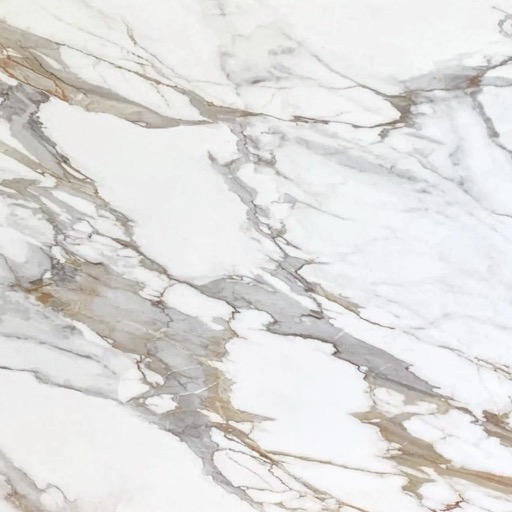
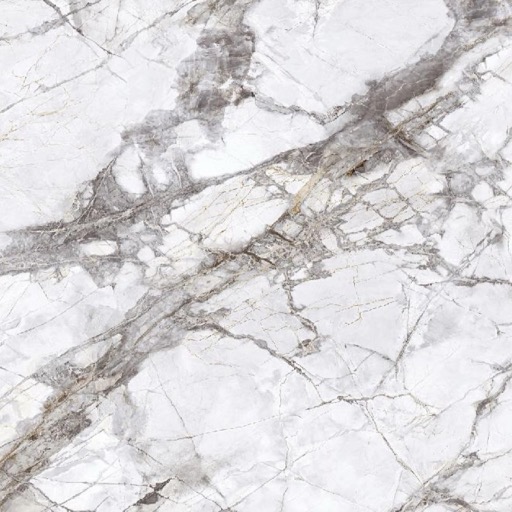
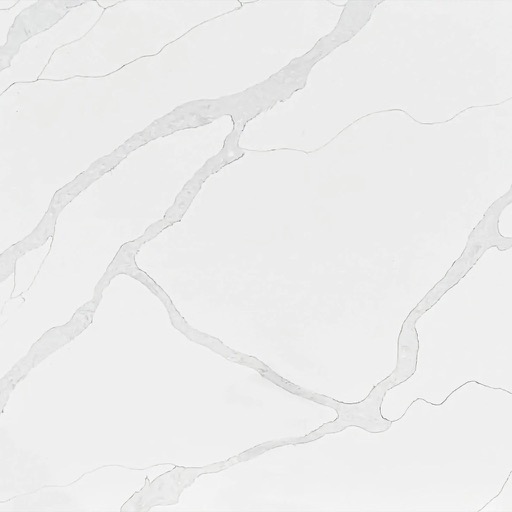
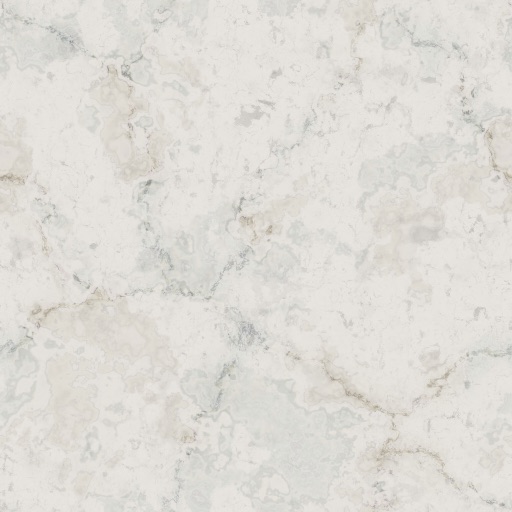

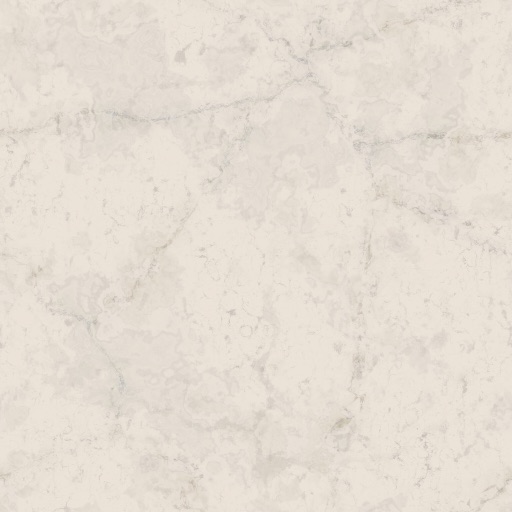
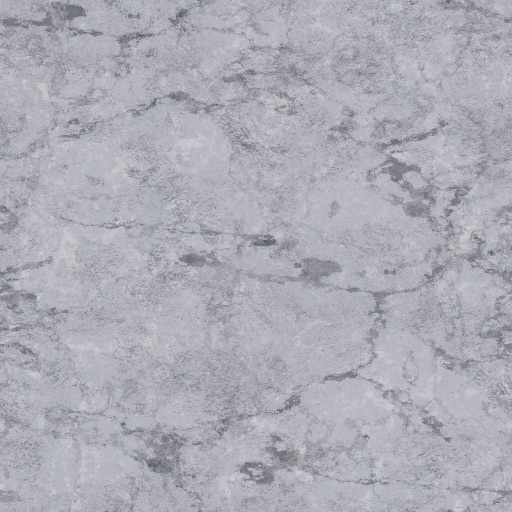
Top row: marble-look engineered quartz. Bottom row: natural marble. The quartz veins are clean, confident lines; the marble is cloudier and less regular — up close, the usual giveaway.
Convincing: soft grey veining on white, seen from standing distance or in a photo, on long runs with a simple eased edge. Less convincing: very bold veins, which are hard to make look random; thick mitred edges and waterfall ends, where a vein must turn a corner; and seams, where a quartz pattern may simply stop.
And the third stone in the conversation: quartzite. It is not quartz. Quartz countertops are the engineered slabs on this page; quartzite is a natural stone — sandstone metamorphosed until its quartz grains fused — quarried like marble. Real quartzite is much harder than marble, generally does not etch, and often has soft, marble-like veining, which is why it gets suggested to people who love marble but fear etching. Two cautions: it still wants sealing and slab approval, and some stones sold as quartzite are partly softer carbonate stone that does etch. The lemon test on an offcut settles it.
Slabs, seams, and what a good fabricator does without being asked
Every marble slab is unique, so you approve the slab, not the sample. Go to the stone yard, see the actual slabs your top will be cut from, and have them tagged for your job. A palm-sized sample cannot show how the veins move across eight feet, or where a dark cloud will land in the middle of the island.
Long runs and islands usually need more than one piece. Bookmatching opens two consecutive slices from the same block like a book, so the veining mirrors across the joint — a classic for islands and waterfalls, and only possible if those slabs are bought together. Otherwise the fabricator vein-matches the seam as well as the stone allows. Quartz is consistent, though colour can drift slightly between production runs, so cut the whole job from one batch; and a veined quartz needs exactly the same seam planning as marble.
Underneath, both stones ask the same things of the cabinets. They are close enough in weight that the boxes do not care which you pick; what matters is that the run is level, joined and fastened.
- Thickness — 2 cm or 3 cm, in either stone; the thicker is stiffer over overhangs, and the choice sets your finished counter height
- Support at overhangs — past 10″ of unsupported overhang on a ¾″ quartz top, add corbels or a steel bracket; your fabricator has the final word, and for marble ask them directly. Sizing an island overhang is in the island guide
- Box material — matters less than a run screwed together and to the wall; see plywood vs particle board
Whichever stone you choose, these five habits matter more than the upgrade to a rarer slab:
Template only after the cabinets are installed and level. Not from drawings, not from the old counter. Stone does not bend to meet a cabinet that is a few millimetres out; it rocks, or it cracks later. What a fabricator checks on template day. Reinforce the narrow strips. The thin bridge in front of an undermount sink and the strips either side of a cooktop are the weakest stone in the kitchen, and marble may have filled fissures running through them; many shops set steel or fibreglass rods into grooves on the underside there. The sink guide covers the sink side. Lay out the veins and seams on the actual slabs before cutting. A good shop shows you where each piece comes from, on a photo or a full-size layout, so the dramatic vein lands across the island and not in the seam behind the cooktop. Keep one offcut. A piece of your own slab, labelled and kept in the basement, is what a repair person colour-matches a chip filler to, and the only way to know what “the same stone” looked like when a section needs replacing. Trivets and a board from day one. On quartz for the heat, on marble for the acid and the knife. The first week sets the habits.
Six things this choice does not decide
A lot of the heat in this argument comes from blaming the stone for things the stone has nothing to do with.
- Whether the counter cracks. Cracks in either stone usually trace back to cabinets that were not level, an unsupported overhang, a narrow strip left without reinforcement, or a slab stressed in transport. A well-installed top of either kind does not crack from ordinary use; the one exception, a sudden blast of heat on quartz, is covered above.
- Whether the cabinets can carry it. The two weigh much the same for the same thickness. The boxes care about level, fastening and support, not about which stone is on top.
- How the kitchen photographs. From standing distance and in photos, good marble-look quartz and real marble are hard to tell apart. The difference is up close and over years.
- How clean the kitchen is. Both wipe clean with warm water and a mild, pH-neutral cleaner. Quartz is non-porous and sealed marble absorbs slowly; in a kitchen that is wiped down every night, neither is the place germs live. The cutting board is.
- What the house is worth. Buyers notice a counter’s condition, colour and layout long before they ask what it is made of. A tired, chipped top of any material costs more at sale than the choice between these two.
- The floor and the backsplash. They are separate decisions with their own trade-offs — what goes underfoot and porcelain or ceramic on the wall. A veined counter wants a quieter partner on both, but neither stone limits what you can choose.
And one piece of sales language to watch for: “maintenance-free.” Quartz is low-maintenance, which is not the same thing — it still needs a trivet every time. Its twin on the marble side is the sealer sold as stopping etching. An ordinary impregnating sealer does not; a few surface films and coatings do claim to, and they are a layer over the stone that changes its look and has to be kept up and eventually replaced. Ask which kind you are being sold.
How to tell what you are being sold
A showroom sample is small, perfectly finished and lit from above — the most flattering way to see any stone. Carry it to a window and look along it, not down at it. For marble, take an offcut of the actual stone home: a drop of lemon juice, a ring of red wine and a smear of olive oil left overnight on one corner tell you more than any brochure. For quartz, ask to see your edge profile on a real cut piece, and the back of the slab, where the body colour shows.
The name of the slab tells you little. These questions tell you more:
- Is this marble calcite or dolomite, and is it polished or honed? — the two answers together predict how fast and how visibly it will etch
- Which sealer, how many coats, and who reseals it? — “sealed” on a quote should come with a product name and a schedule
- Can I see and tag the actual slabs? — for marble always; for a veined quartz, ask to see the layout on the slab before cutting
- Is the veining through the body, or mainly on the face? — for marble-look quartz, it decides how the edges, cutouts and mitres will look
- Are all my pieces coming from one production batch? — for quartz, so the island and the perimeter match
- Where will the seams go, and how will the strips at the sink and cooktop be reinforced? — a good shop answers both without hesitating
- What does the warranty exclude? — for quartz, heat damage is usually excluded; read that line before the brochure
Every countertop Flip supplies is engineered quartz — the Clean, Essence and Signature series, plus the longer list behind More colors — including marble-look designs like those above. We do not sell marble; a real marble top comes from a local stone fabricator. That is also why this page can tell you where quartz loses.
Either way, the top is templated after the cabinets are installed and level. The free planner draws the countertop over your real cabinet run, with sink and cooktop cutouts, seams and waterfall ends, and gives you the area to take to a fabricator — here is how to draw it. You can add a stone backsplash at 4″ or full height, and put your cabinet colour next to the veining before anyone cuts a slab; cabinet colours covers what suits veined stone.
What we would do, kitchen by kitchen
General rules are easy. Here is how the choice actually falls for the kitchens people really have.
A family kitchen in a house you plan to stay in. Quartz on the working runs, without much hesitation. Juice, ketchup and lemon wedges are a lot of acid, and children do not use coasters. If somebody in the family has always wanted marble, give them the one place where it is safe: a baking station, or the backsplash.
A condo. Quartz, usually marble-look. Condo kitchens are often open to a wall of glass, which is exactly the low, raking light that shows every etch on polished marble. Keep appliances and fruit bowls out of the direct sun on a quartz top if you can.
A basement suite or a rental you own. Quartz. A tenant will not reseal anything and will put the hot pan down where it is convenient. Choose a mid-tone or patterned quartz rather than the purest white, so a scorch or chip shows less, and leave a couple of trivets as part of the furniture.
A cottage or a weekend place. Either, and here honed marble has a real case. The kitchen is used in bursts, nobody minds a patina at a lake, and a marble top that has softened over twenty summers suits the place.
A house you are fixing to sell. Marble-look quartz. Buyers want the look in the listing photos and the reassurance at the inspection; few of them want a stone they have to learn how to live with.
A small kitchen. Here real marble is easier than people think: a short run is often one slab, so there is no seam to match, and the difference in cost over a few feet is modest. If you love it and cook lightly, a honed marble top is a reasonable indulgence. Ask for both numbers.
Someone who cooks hard every day. The serious cook squeezes lemons and pulls pans off a high flame, so marble will etch around them and quartz will scorch the day they forget. The honest answer is the split: quartz on the working runs, marble on the island or a baking station, where its cool surface is genuinely useful for pastry and fewer spills reach it. Pick a quartz that complements the marble rather than copying it; a near-copy beside the real thing invites a comparison neither wins.
- You want it to look new in ten years with no effort. Quartz — plain or marble-look — and trivets on day one.
- You love a lived-in kitchen. Honed marble, sealed on schedule, no regrets about the rings.
- You love the marble look but would hate the first etch. Marble-look quartz, laid out with the seams planned.
- You want natural stone that does not etch. A genuine quartzite, tested on an offcut first.
- You want both. Quartz on the working runs, marble on the island or a baking station.
- Hot pans land wherever they land. Marble copes far better than quartz.
If you already live with marble or quartz
An hour on a Saturday prevents most of the marks this page has described.
- Marble: do the water test. A few drops on the busiest spot by the sink, five minutes, wipe. If the stone darkened, reseal this weekend; it is a wipe-on, wipe-off job.
- Marble: change the spray bottle. Read the label on what you clean the counter with. Anything with vinegar, citrus or “descaling” on it goes under the sink for another job; a pH-neutral stone cleaner takes its place.
- Marble: give the bottles a saucer. Oil, vinegar and the hand soap each on a small tray or dish, and a coaster by the coffee machine where the ring zone starts.
- Quartz: put a board under every warm appliance. The slow cooker, the air fryer, the toaster oven, the kettle base if it sits on the counter. Then put a trivet where your hand naturally lands beside the cooktop, not in a drawer.
- Quartz: look at the corners and the seam. Run a fingertip along the edge at the sink and the dishwasher. A small chip is best filled early by a fabricator or with a colour-matched repair kit, before a dishcloth catches it and makes it bigger. A seam that has opened or lifted wants a fabricator’s look.
- Both: check the silicone at the sink. Where the sink meets the stone, the bead should be continuous. A gap there lets water work under the edge and into the cabinet below.
The rest of the room has the same kind of decision waiting: plywood or particle board in the boxes underneath, which floor goes below them, and which tile goes on the wall.
Straight answers
Is marble or quartz better for a kitchen countertop?+
For most busy kitchens, quartz is the practical choice: it does not etch, resists stains and never needs sealing. Marble suits people who want real stone and accept a patina; acids etch it and it scratches more easily, but it handles hot pans far better. Choose the mark you would rather live with: dull acid rings on marble, or a heat scorch on quartz.
What is the difference between etching and staining on marble?+
An etch is a chemical reaction: an acid such as lemon, wine, vinegar or tomato dissolves a thin layer of calcite and leaves a dull, rough patch in the polish. A stain is absorption: oil, coffee or wine soaks into the pores and darkens the stone. Sealer slows staining but cannot prevent etching.
Can you put a hot pan on a quartz countertop?+
Not safely. The resin that binds a quartz slab can scorch, leaving a pale or yellowed mark that cannot be polished out, and a sudden, concentrated heat can crack the stone, especially near a cutout. Use a trivet every time, and stand slow cookers, air fryers and countertop ovens on a wooden board. Marble is far more tolerant of heat than quartz.
Can a chip or a scorch in a quartz countertop be repaired?+
A chip usually can. A fabricator fills it with a colour-matched resin and polishes it flush, and on most colours the repair is hard to find from standing distance. A scorch is different: the resin itself has changed colour, so cleaning and polishing do not bring it back. A badly marked section is usually replaced, which is one more reason to keep an offcut.
How can you tell quartz from real marble?+
Look for repeats: slabs of one quartz design share a pattern, while marble slabs never match. Marble veining has depth, soft edges and crystal sparkle in raking light; quartz veining is usually crisper and flatter. The surest test is a drop of lemon juice on an offcut: real marble shows a dull spot within minutes.
Is quartzite the same as quartz?+
No. Quartz countertops are engineered from ground quartz bound with resin. Quartzite is a natural stone, sandstone metamorphosed until its grains fused, quarried like marble. Genuine quartzite is much harder than marble and generally does not etch, but it still needs sealing, and some stones sold as quartzite do etch, so test a sample first.
How often do marble countertops need to be sealed?+
It depends on the marble, the finish and the sealer; many fabricators suggest roughly once or twice a year for a kitchen. The reliable guide is the water test: leave a few drops on the busiest spot for several minutes. If the stone darkens, it needs resealing. Sealing helps with stains, not etching.
Can etch marks be removed from marble?+
Yes, though not by cleaning, because an etch is a change in the surface rather than something on it. Light etches on polished marble can be buffed out with a marble polishing compound. Deeper or widespread etching is honed and re-polished by a stone restorer, who can bring a whole counter back to an even finish. On honed marble, most etches barely show in the first place.
Does marble-look quartz look fake?+
The good designs are convincing at standing distance and in photographs, especially soft grey veining on white. It gives itself away up close, in patterns that repeat from slab to slab, and at thick mitred edges or seams where veining stops abruptly. Careful seam layout and a simple edge profile go a long way.
Is honed or polished marble better for a kitchen?+
Honed is the forgiving choice for a working kitchen. Its matte finish hides etch marks, which look like dull spots on polished marble but barely show on a surface that is already matte. The trade is that honed marble tends to stain a little more readily, so keep it sealed. Polished shows the veining at its richest, and every etch too.
See the veining on your own cabinets.
Draw the room, put a marble-look top over your real cabinet run, and see it next to your doors before anybody cuts a slab.
Open the 3D planner →